How Much Does It Cost to Make a Gacha Game?
From small mobile projects to ambitious open-world RPGs, gacha development budgets vary enormously. We break down staffing, production, servers, marketing, and ongoing costs, then let you build your own budget.

It varies.
A small 2D character-collection RPG and a massive open-world gacha game are two very different financial beasts. Development costs depend on everything from team size and production timelines to art, animation, voice acting, and technical infrastructure. And that's before we get into the ongoing expense of keeping a live-service game running.
In this report, we're breaking down what it actually costs to make a gacha game, where studios spend their money, and how those expenses affect profitability.
We'll examine real-world examples, separate documented figures from hypothetical estimates, and give you interactive calculators to experiment with the numbers yourself.
Morganyte • Article Navigation
Table of Contents
A friendly warning: This article is a 121-minute read. Yes, you read that correctly. So, for the love of God, please use this table of contents. We love a dedicated reader, but nobody needs to develop a gacha game just to reach the bottom of an article about developing a gacha game.
Jump to a Section
Click any section to jump directly to it. You can return to this menu whenever you need to find your place.
What Actually Counts as a Gacha Game Development Cost?
When Genshin Impact launched in 2020, developer miHoYo estimated that its development costs would reach approximately $100 million by the end of the year.
That's a staggering amount of money for a free-to-play game. But it raises a question.
What exactly goes into a $100 million development budget?
Does that figure include employee salaries, advertising, server infrastructure, voice acting, and the cost of producing new content after launch?
The answer depends on how the company defines and reports its expenses.
There's no universal accounting definition of a game's development budget. Studios and publishers categorize spending differently, and publicly reported figures don't always explain what's included.
For gacha games, that distinction matters even more because many are designed to operate for years after release.
To understand where the money goes, let's break the costs into four major stages.
Morganyte Cost Explorer
Where Does a Gacha Game's Budget Go?
Explore the four major spending stages. Select a stage to see what studios typically need to pay for.
01 Preproduction
- Game concepts and creative direction
- Gameplay prototypes and technical feasibility
- Early character and environment designs
- Economy and progression system planning
- Project scheduling and production planning
- Market research and initial testing
02 Production
- Engineering and gameplay programming
- Character modeling, illustration, and animation
- Environment and level design
- Writing, music, audio, and voice production
- UI/UX design and accessibility
- Quality assurance and optimization
- Contractors, software, and production overhead
03 Launch Preparation
- Beta testing and release certification
- Localization and regional release preparation
- Server deployment and load testing
- Customer support setup
- Advertising and promotional campaigns
- Community management and launch events
04 Live Operations
- New characters, events, and story content
- Ongoing development and quality assurance
- Server hosting, monitoring, and security
- Customer support and community operations
- Localization and voice production for updates
- Retention campaigns and ongoing marketing
- Maintenance, bug fixes, and platform updates
Note: These categories can overlap. Studios may also report or account for expenses differently.
Preproduction: Planning the Game Before Building It
Before a studio starts producing hundreds of character animations or implementing complex combat systems, it needs to establish what the game is supposed to be.
Preproduction typically involves concept development, early gameplay prototypes, technical planning, visual direction, market research, and determining the project's production scope.
For a gacha game, this may also include designing the character progression system, planning how players acquire characters or equipment, and modeling the in-game economy.
These decisions affect far more than monetization. They influence how many characters the studio needs to produce, how frequently new content must arrive, and how much development work will be required to support the game over time.
A project that spends months experimenting with its combat system or rebuilding prototypes can accumulate substantial costs before full production begins.
Production: Turning the Concept Into a Playable Game
Production is generally where the largest concentration of development work occurs.
Programmers build gameplay systems, artists create environments and characters, animators bring those assets to life, and designers develop combat encounters, progression systems, and playable content.
Writers, composers, sound designers, producers, and quality assurance teams also contribute throughout development.
 Nova
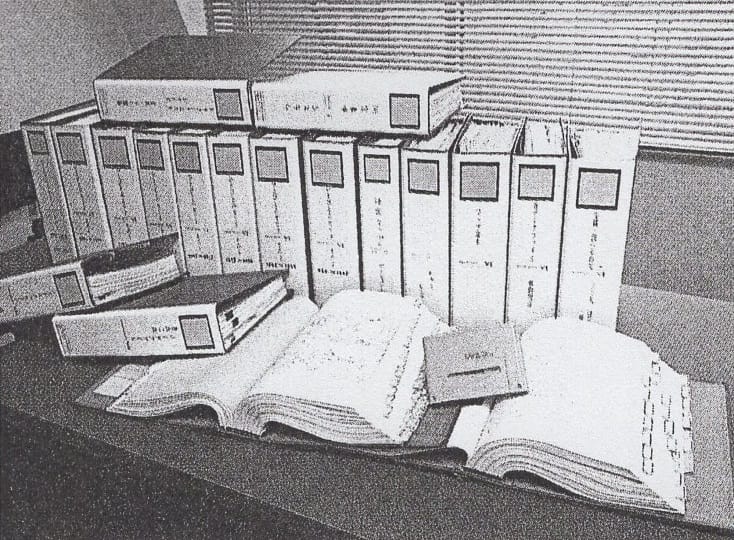
The exact staffing requirements depend on the game. But in a really cool article I wrote about how video game scenarios are written, I found Dragon Quest VI's Yuji Horii wrote 5,000 pages of scenarios in 1995.
In 1989, he revealed writing the dialogue alone took seven months.
Over 7 months. To be honest, I underestimated how long it would take. I figured Chapter 5 would take about 1/2 of the amount of time that Chapters 1-4, in total, took… but that wasn’t the case. I had to change all the dialogue in Chapter 5 (including for locations you’d already visited), so it actually took more time than Chapters 1-4 together. For awhile, I seriously thought it would never end. (laughs)
Wild shit.
These games are both over 30 years old. Imagine how much planning it takes to create a mid-sized mobile gacha RPG.
A 2D mobile RPG using illustrated character portraits and relatively simple combat encounters may require a very different production team from a cross-platform 3D action RPG with explorable environments, cinematic storytelling, and elaborate character animations.
Both can feature gacha mechanics, but their underlying production requirements are dramatically different.
With that said, development schedules matter just as much as team size. Every additional month can mean another month of salaries, contractor payments, software subscriptions, equipment costs, and other expenses.
This is why delays can have significant financial consequences even when a game's overall design remains unchanged.
Launch Preparation: Getting the Game Into Players' Hands
Completing a playable game doesn't mean it's ready for a worldwide release.
Studios may need to conduct large-scale testing, prepare server infrastructure, establish customer support processes, complete localization, meet platform requirements, and resolve technical problems discovered during beta testing.
This is why beta tests are such a huge deal. A software company might release a minimum viable product (MVP) to test whether an idea has legs.
But game studios, especially those working on highly anticipated releases, often face pressure to deliver something that already feels polished.
Otherwise, participants are going to post footage and roast it. And suddenly, prospective players who haven't even touched the game are forming opinions based on an unfinished build.
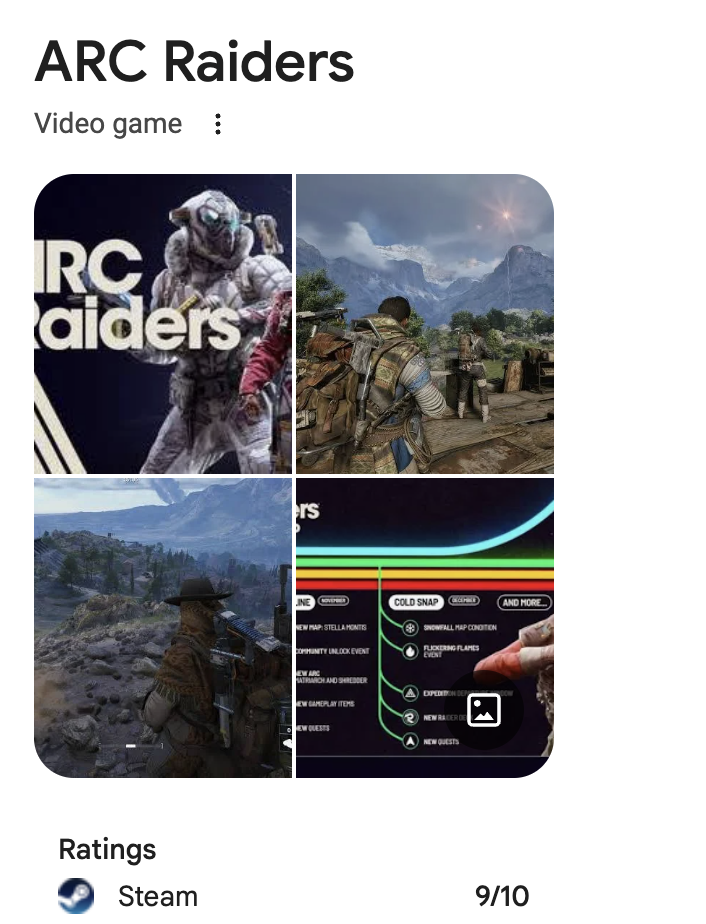
Of course, first impressions aren't always permanent. Sometimes the game turns out to be really good, too:

Marketing can introduce another substantial expense.
Advertising campaigns, promotional trailers, influencer partnerships, community management, and regional launch activities all require resources. However, these expenses may be tracked separately from the core development budget.
This creates an important problem when comparing reported costs between games.
One company's published figure might represent production spending alone, while another might combine development, marketing, and other launch expenses.
Without knowing what each figure includes, comparing them directly can produce misleading conclusions.
Live Operations: The Cost of Running a Game That Never Really Ends
For many gacha games, launch is the beginning of another major financial commitment.
Players expect new characters, story updates, limited-time events, balance adjustments, bug fixes, and ongoing technical support. Delivering that content requires a continuing production pipeline.
Consider something every gacha player is familiar with: a new character banner.
When a character gets announced, the community's reaction usually falls somewhere between "ew, mid" and "Take my money."
For the studio, however, that banner represents a considerable amount of work.
Before players can spend a single pull, artists have to design the character, writers develop their personality and backstory, animators bring them to life, and programmers implement their abilities. Combat designers balance their performance, voice actors record dialogue, and QA teams test everything before release.
Then there's the promotional campaign. Character trailers, social media announcements, livestreams, and other marketing materials all require additional resources.
And after all that? Players might decide the character is mid and skip the banner entirely.
But, the marketing materials for the banner itself may be really amazing and generate retention anyway.
Just like this one:
That's what makes live operations so consequential. A studio can invest months of work into a character without knowing how players will respond. A popular release may generate substantial revenue, while an underwhelming one can leave the studio with disappointing returns on its investment.
Of course, character banners are only one part of the operation.
Artists and animators must continue producing assets for future updates. Writers develop additional scenarios. Programmers implement features and maintain existing systems. QA teams test patches, while localization and voice production teams prepare content for different regions.
Meanwhile, the game still needs functioning servers, account services, customer support, security monitoring, and operational management.
Some studios begin developing post-launch content well before release, meaning the boundary between initial development and live operations isn't always clear.
A game might therefore recover its original production investment while continuing to incur substantial expenses every month.
This is why the cost to launch a gacha game and the cost to sustain one are two different financial questions.
Why Reported Development Budgets Can Be Misleading
Alright, let's say two hypothetical studios that each announce a $20 million development budget.
- Studio A reports only the direct expenses associated with building the game before launch.
- Studio B includes additional production-related overhead and certain launch preparation costs.
Although both companies report the same amount, their figures don't necessarily describe equivalent spending.
Other complications include shared technology costs, outsourced development, internal accounting policies, publishing arrangements, and whether expenses have been capitalized or recognized as incurred.
For this analysis, we'll use consistent definitions when building our hypothetical budgets.
- Initial development investment will refer to the expenses required to develop and prepare a game for release, with marketing identified separately wherever possible.
- Ongoing operating costs will refer to the recurring expenses necessary to maintain the service and produce post-launch content.
- Total project investment will account for both the initial development commitment and the additional spending required over the period being examined.
These distinctions give us a more useful foundation for answering the bigger question.
How much does a gacha game actually cost?
Because before comparing a small mobile RPG with an ambitious open-world production, we need to make sure we're measuring the same things.
How Much Does a Small, Mid-Sized, or AAA-Scale Gacha Game Cost?
There's no single price tag for developing a gacha game.
A small studio creating a 2D character-collection RPG faces very different production requirements from a company building a large, cross-platform action game. Both might feature limited-time banners, character rarities, and premium currencies, but those similarities tell us very little about their development budgets.
The more useful question is: What kind of game is the studio trying to build, and how many people will it take to finish it?
To illustrate how production scope affects costs, let's examine three hypothetical projects.
These are not estimates of any particular game's actual development budget. They're financial models built around fictional studios, using explicitly stated assumptions about staffing, development time, and additional production expenses.
Scenario One: A Small 2D Mobile Gacha RPG
Imagine an independent studio developing a turn-based mobile RPG with illustrated characters, dialogue-driven storytelling, and relatively simple combat animations.
The game features a limited roster of collectible characters, a handful of environments, and a straightforward progression system.
Instead of creating expansive 3D environments or elaborate cinematics, the team focuses on character illustrations, combat effects, interface design, and a manageable amount of story content.
Our fictional studio employs an average of 12 full-time-equivalent workers over an 18-month development period.
Using an illustrative fully loaded annual labor cost of $90,000 per worker, its staffing expenses would total approximately $1.62 million.
We then allocate another $380,000 for external production, software, infrastructure preparation, testing, and other pre-launch development expenses.
That brings our modeled development and preparation budget to $2 million, excluding a separately budgeted marketing campaign.
Could a small gacha game be built for less?
Certainly.
A smaller team, shorter production schedule, lower regional labor costs, existing technology, or a narrower feature set could reduce spending substantially.
However, even relatively modest games require more than a functional summoning system. The studio still needs to produce enough content to make the experience engaging and establish a technical foundation that can support future updates.
Otherwise, it's going to be hard to get any separation from the hundreds of other similar games out there. As you can see, low ambitions doesn't always equal financial survival.
Scenario Two: A Mid-Sized 3D Character-Collection RPG
Now look at a studio developing a 3D RPG with explorable areas, fully modeled characters, animated combat, voiced story sequences, and regular post-launch content updates.
Compared with our smaller mobile project, the production workload expands considerably.
Each playable character may require concept art, modeling, rigging, animation, combat implementation, visual effects, audio, and testing.
Environments also become more complex, while the studio must coordinate a larger number of technical and creative specialists.
For this scenario, we'll assume an average development workforce of 70 full-time-equivalent employees over three years.
At a hypothetical fully loaded annual labor cost of $120,000 per worker, staffing expenses reach $25.2 million.
Adding $4.8 million for outsourcing, specialized production services, technology, testing, and launch preparation brings the modeled budget to $30 million, again excluding separately accounted marketing expenses.
This is fifteen times the development investment in our first scenario.
But the difference isn't caused by a more sophisticated gacha banner.
It's driven by the number of people involved, the length of production, and the amount of content those workers must create.
Scenario Three: A Large Cross-Platform Action RPG
Our third fictional project is considerably more ambitious.
Imagine a large-scale action RPG developed for PC, mobile devices, and consoles, featuring extensive environments, elaborate combat systems, cinematic storytelling, high-detail characters, and multilingual production.
Supporting several hardware platforms introduces additional engineering, optimization, and quality assurance requirements. I honestly think people don't realize how time-consuming and expensive it is to launch on every single platform simultaneously.
It's why many studios slow-crawl this endeavor over years.
Anyway, the game also needs substantial content ready for launch, alongside a production pipeline capable of delivering future expansions and characters.
For this model, we'll assume an average workforce of 300 full-time-equivalent employees across four years of development.
Using a hypothetical fully loaded annual labor cost of $140,000 per worker, staffing expenses alone reach $168 million.
An additional $32 million for outsourced production, specialized technology, testing, infrastructure preparation, and other development-related expenses brings our illustrative budget to $200 million, excluding a separately tracked marketing campaign.
This figure isn't a verified benchmark for AAA gacha games, nor does every large-scale production require this level of spending.
It demonstrates what happens when a studio combines a large workforce with a multiyear development schedule.
The cost of maintaining hundreds of employees can become enormous before accounting for advertising or years of post-launch support.
Comparing the Three Development Models
The differences become clearer when we place the projects side by side.
Morganyte Financial Models
How Production Scale Changes Development Costs
Three fictional gacha game projects, calculated using hypothetical staffing and production assumptions. All amounts are in USD.
| Budget Factor | Small 2D RPG | Mid-Sized 3D RPG | Large Action RPG |
|---|---|---|---|
| Average team size | 12 FTE | 70 FTE | 300 FTE |
| Development time | 1.5 years | 3 years | 4 years |
| Annual labor cost per FTE | $90,000 | $120,000 | $140,000 |
| Total staffing cost | $1.62M | $25.2M | $168M |
| Other development costs | $380K | $4.8M | $32M |
| Modeled total | $2M | $30M | $200M |
FTE = full-time equivalent. Staffing figures represent average workforce levels, not necessarily the number of employees at launch. Marketing and ongoing post-launch operations are excluded.
Explore the Assumptions
01. Small 2D Mobile RPG
A compact mobile RPG with illustrated characters, turn-based battles, and dialogue-driven storytelling.
12 FTE × 1.5 years × $90,000 = $1,620,000Add $380,000 for external production, software, testing, infrastructure preparation, and other development expenses.
Total modeled investment: $2,000,00002. Mid-Sized 3D Character RPG
A 3D character-collection RPG with explorable areas, animated combat, voiced scenes, and regular content updates planned for launch.
70 FTE × 3 years × $120,000 = $25,200,000Add $4,800,000 for outsourcing, specialized production, testing, technology, and launch preparation.
Total modeled investment: $30,000,00003. Large Cross-Platform Action RPG
An ambitious action RPG for PC, mobile, and consoles, featuring extensive environments, cinematic production, complex combat, and multilingual content.
300 FTE × 4 years × $140,000 = $168,000,000Add $32,000,000 for external production, specialized technology, testing, infrastructure preparation, and additional development expenses.
Total modeled investment: $200,000,000Methodology: These are illustrative calculations, not verified game budgets or industry averages. Labor costs are fully loaded hypothetical annual costs. Additional expenses are modeled allowances, not independently researched spending benchmarks.
In these examples, labor represents the majority of each modeled budget.
That doesn't mean every real studio spends the same percentage on staffing. Outsourcing arrangements, regional labor markets, licensing costs, proprietary technology, and internal accounting practices can change the distribution considerably.
It does, however, demonstrate why team size and production duration deserve so much attention when estimating development costs.
After all, a larger project needs to pay those people for as long as production continues.
Why These Numbers Aren't Industry Averages
It's tempting to turn our three examples into fixed categories: small gacha games cost $2 million, mid-sized games cost $30 million, and AAA-scale games cost $200 million.
That would be misleading.
Besides, studios keep their financials hidden on purpose. I'm not about to just make shit up here.
Our figures are scenario outputs, not measured industry averages or established budget thresholds.
A studio with a small permanent team might outsource much of its artwork and animation. Another might operate in a region with lower average labor costs. A third might reuse an established engine, internal tools, or technology developed for previous projects.
Production schedules can also vary considerably. A game developed over five years with a modest team may cost more than a larger project completed in a shorter period.
Even the definition of a full-time development team can become complicated when studios use contractors, temporary workers, and shared internal departments.
That last little point is important as Square used to share departments a lot during their heyday in the late 80s-90s. Those folks were chronically overworked even when Square's profits began to climb.
You can read about that fascinating little tidbit in this cool interview.
—What was it that caused the delay?
Horii: Partly it was the overlapping schedules of Chrono Trigger and the DQI&II port, but ultimately we just needed a lot more time to refine our ideas. The required memory kept expanding too. At first we talked about it being a 24Mbit game, but when we started running out of space that turned into 32Mbit. Even then we were short on space, so there were events we had to cut. I'm personally proud of how much we managed to fit in there though.
For that reason, these examples should be understood as starting points for financial analysis rather than definitive estimates.
The takeaway is that a gacha game's production scale matters far more than the mere presence of randomized rewards.
And as we'll see next, the single most important variable in many development budgets is also one of the easiest to underestimate, which is the cost of employing the people who make the game.
The Biggest Expense: Paying the People Who Make the Game
When estimating the cost of developing a gacha game, one of the first questions should be how many people the studio needs to employ.
Not how many characters the game will feature. Not how many banners it will launch with. And certainly not how expensive its premium currency will be.
How many people will be working on the game, how much will they cost to employ, and how long will development take?
These three variables can account for a substantial portion of a project's development budget.
However, there's an important geographical consideration that often gets overlooked in discussions about gacha development.
Many of the genre's most recognizable games come from studios based in China, Japan, and South Korea. Applying American software engineering salaries to those studios can produce misleading estimates.
Labor costs vary by country, city, company, occupation, seniority, and employment arrangement. A senior engine programmer working for a major studio in Shanghai may have a very different compensation package from a junior artist employed by a smaller developer in Fukuoka.
Even within the same country, two studios can have dramatically different staffing expenses.
For that reason, a realistic financial model needs to account for regional labor markets rather than assuming every developer costs the same amount to employ.
What Game Developers Actually Earn in China, Japan, and South Korea
Japan offers a useful starting point because its gaming industry has published employment and compensation research.
According to the Computer Entertainment Supplier's Association (CESA), its 2025 industry reporting identified average annual game-industry compensation of approximately ¥7.23 million.
That's about $46,000 USD when rounded up.
That figure provides context for Japanese employment costs, but it isn't a universal salary for every game developer. It also shouldn't be treated as a complete employer expense.
South Korea presents another interesting example.
A March 2026 analysis of financial disclosures from ten major Korean game companies found average annual employee compensation of approximately ₩97 million for 2025.
That's roughly $70,000 USD.
However, this sample covers large companies rather than the entire Korean development industry. If the developer isn't a major company, the salary is probably going to be lower than that.
China requires similar care.
Compensation at Chinese game studios can vary substantially across cities, specializations, and employers. A major developer recruiting experienced engineers in Shanghai or Shenzhen shouldn't automatically be treated as representative of every studio in the country.
I tried to find information about Chinese game dev salaries, but all I got was unverified gobbledygook so I won't even post that here.
Rather than assigning a single unsupported national average to Chinese game developers, our financial models will allow users to enter regional compensation assumptions and adjust them for their intended studio.
The same flexibility will apply to Japan and South Korea.
Salary Isn't the Same as the Cost of Employing Someone
Suppose a Japanese game developer receives an annual salary of ¥6 million.
Does that mean the studio spends exactly ¥6 million to employ that person?
Not necessarily.
Depending on the employment arrangement, the company may also incur employer-side social insurance contributions, recruitment expenses, equipment costs, training expenses, and other employment-related overhead.
Bonuses and allowances also need to be considered, especially if they aren't already included in the reported salary figure.
This is where the concept of a fully loaded labor cost becomes useful.
Instead of calculating only what employees receive in compensation, a fully loaded model attempts to estimate the broader expense of employing them.
For example, consider a hypothetical studio that budgets ¥6 million in annual compensation for one employee and applies an additional 20% allowance for employer costs and allocated overhead.
Its modeled annual employment expense becomes ¥7.2 million.
That 20% is an illustrative modeling assumption, not a verified Japanese statutory employer contribution rate. Actual employer costs depend on applicable laws, benefits, company policies, and which expenses are included in the calculation.
The same principle applies in China and South Korea, although the specific employment obligations and compensation arrangements differ.
For an accurate project budget, studios must avoid both undercounting employment expenses and double-counting costs already included in compensation figures.
Why Team Composition Matters as Much as Team Size
We know a game studio isn't simply a collection of programmers.
Different development disciplines contribute to different stages of production, and their staffing requirements change as the project progresses.
Early development might rely heavily on designers, engineers, technical artists, and production leads.
As the game enters full production, the studio may expand its animation, environment art, writing, audio, and quality assurance teams.
A character-focused gacha game could require particularly extensive illustration, modeling, animation, and visual effects work.
A technically ambitious action RPG might need additional specialists in combat engineering, physics, optimization, rendering, networking, and cross-platform development.
Other essential roles include producers, user interface designers, localization coordinators, build engineers, security specialists, and live-service operations staff.
Not every position needs to be filled by a permanent employee. Studios frequently combine internal teams with external production partners.
But whether the work happens internally or through a contractor, someone still needs to pay for it.
Why Development Time Can Be More Expensive Than It Looks
Take a look at a fictional studio with an average workforce of 80 full-time-equivalent employees.
If its average fully loaded annual labor cost is $65,000 per employee, one year of staffing would cost approximately $5.2 million.
Extend the same workforce across three years, and the modeled expense rises to $15.6 million.
If development takes another six months without any reduction in staffing, the project incurs an additional $2.6 million in labor expenses.
These calculations are illustrative, not estimates of a particular Asian studio.
They demonstrate why development delays can be financially significant even when a studio doesn't hire additional workers.
Of course, real teams rarely maintain exactly the same staffing level throughout production.
A project may begin with a small preproduction group, expand during full production, and then transition some employees into post-launch development.
That's why using average full-time-equivalent staffing, rather than simply multiplying the launch-day headcount by the total development period, generally produces a more useful estimate.
Outsourcing Doesn't Make Production Free
Studios may outsource character illustrations, 3D models, animation, cinematics, localization, audio production, or quality assurance.
This can provide access to specialized expertise without maintaining every production discipline internally.
However, outsourcing isn't automatically cheaper.
External vendors charge for their services, and the studio still needs employees to manage deliverables, review quality, integrate assets, and coordinate revisions.
Outsourcing can also introduce additional scheduling, communication, and rework costs.
The relevant question is whether the arrangement provides the required quality, capacity, and flexibility at a sustainable overall cost.
For our budget models, we'll distinguish internal employee expenses from externally purchased production services.
That distinction will help us avoid counting the same work twice.
How Regional Labor Costs Change the Development Budget
Let's return to our fictional gacha projects.
The earlier scenarios used location-neutral annual employment costs to demonstrate how team size and development duration affect spending.
Again, those assumptions shouldn't be interpreted as typical salaries in China, Japan, or South Korea.
For a more geographically relevant model, we need to separate the calculation into three inputs: average team size, development duration, and annual fully loaded labor cost in the studio's local currency.
A Japanese studio might model expenses in yen. A Korean studio would use won, while a Chinese studio would calculate costs in yuan.
The model could then convert the resulting budget into US dollars for international comparisons using a clearly dated exchange rate.
This approach also makes it possible to test different staffing strategies.
A company could compare a smaller internal team supported by outsourcing with a larger permanent workforce. It could examine the cost of extending production by six months or increasing its animation department before launch.
None of those calculations can predict the exact final cost of a real game.
But they reveal something important about development economics.
Morganyte Interactive • Labor Economics
Calculate Your Studio's Staffing Costs
Explore how location, compensation, team size, and development time affect labor expenses.
MODELED TOTAL LABOR COST
How is this calculated?
Annual fully loaded cost = annual compensation × (1 + additional employer cost percentage / 100).
Total labor cost = average full-time-equivalent employees × annual fully loaded cost × development duration in years.
The 20% starting overhead allowance is hypothetical, not a country-specific legal rate. Change it to reflect actual employment obligations and included expenses. Avoid counting bonuses or overhead twice.
Country selection changes the currency and example compensation input. It does not automatically estimate market salaries or exchange rates. Outsourcing, marketing, and non-labor production costs are excluded.
Educational financial model. Default inputs are fictional and should not be interpreted as industry averages.
The largest financial risk here is often the ongoing cost of maintaining the people required to finish that feature and everything connected to it.
And nowhere is that production complexity more visible than in the creation of the characters players eventually summon.
Why Art, Animation, and Voice Acting Get So Expensive
When a gacha game announces a new playable character, players usually see the finished product: an elaborate character design, a flashy promotional trailer, beautifully animated abilities, and perhaps a familiar voice actor bringing the character to life.
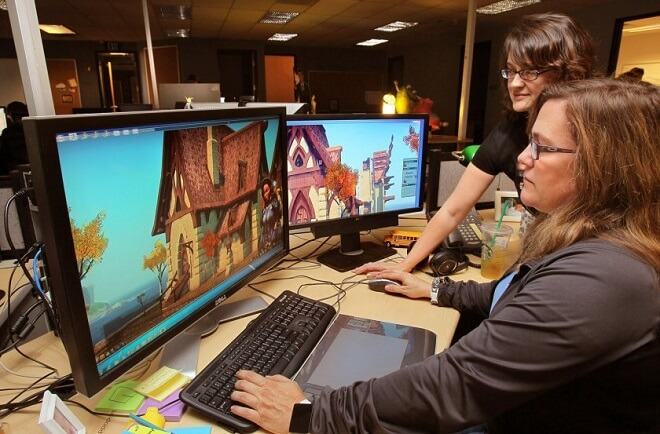
What they don't see is the production pipeline behind that release.
Depending on the game's scope, a single playable character can require contributions from concept artists, character modelers, technical artists, animators, gameplay programmers, visual effects specialists, sound designers, writers, voice actors, localization teams, and quality assurance testers.
Not every gacha game uses all these disciplines to the same extent. A 2D collectible RPG might rely on illustrated portraits and relatively simple battle animations, while a large-scale 3D action RPG could require a fully modeled character with an extensive set of combat animations.
But the underlying financial principle is the same.
Every additional character creates production work, and that work has to be paid for.
Character Concept Art: Where the Production Pipeline Begins
Before a character becomes playable, someone has to decide what that character looks like.
Concept artists develop the visual direction, exploring clothing, hairstyles, silhouettes, accessories, color palettes, and other defining features.
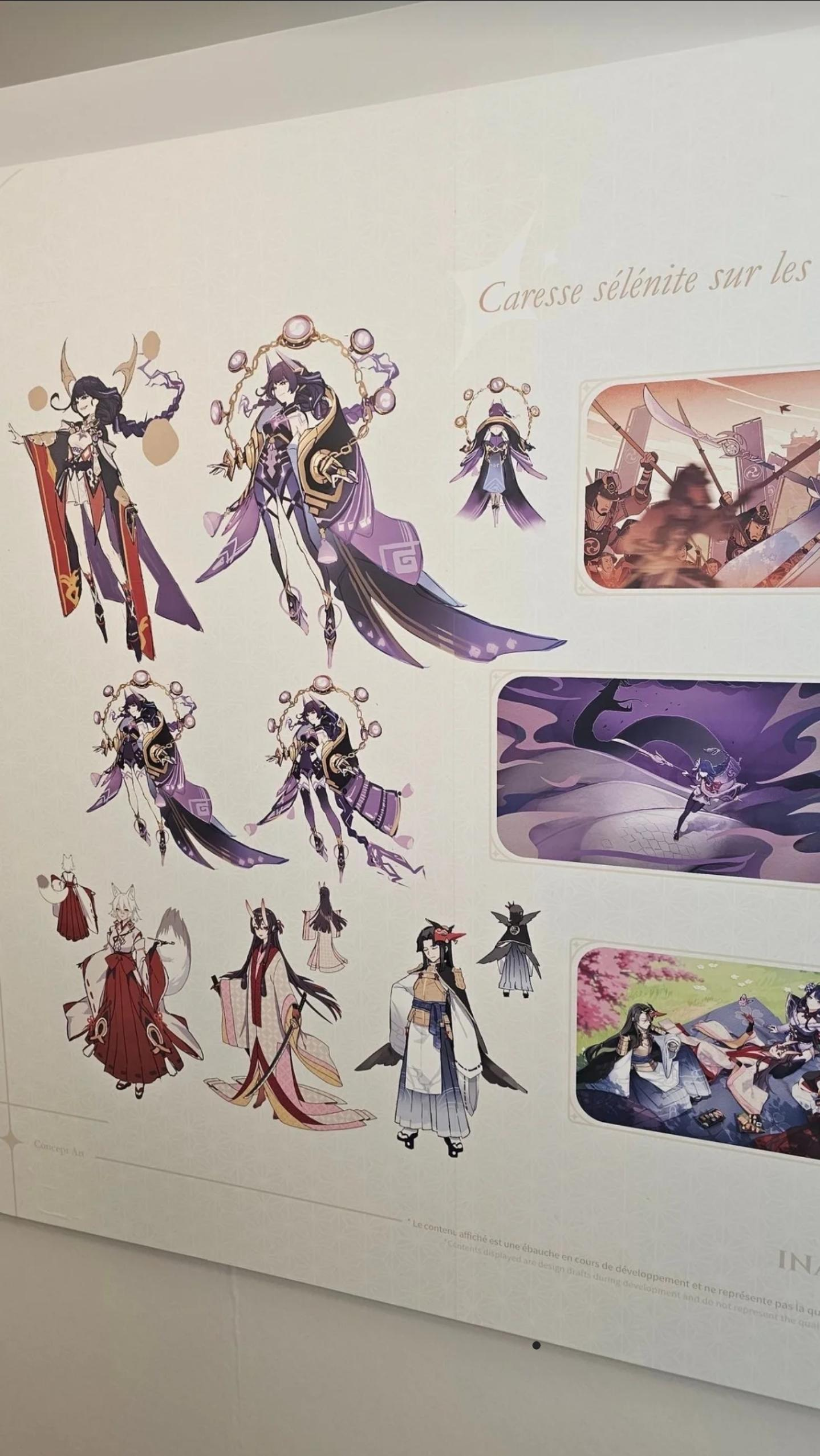
Their work must also fit the game's broader art direction. A character needs to look like they belong in the same world as the existing cast while remaining visually distinct enough for players to recognize them.
This process can involve multiple design proposals, revisions, and approvals before the final concept is selected.
For character-driven gacha games, the visual design carries additional commercial importance. Characters are frequently central to promotional campaigns, story updates, and limited-time banners.
That doesn't mean artists independently determine how those characters will be monetized. It means their creative work becomes part of a much larger product and marketing strategy.
A design that looks effortless in the finished game may have required considerable experimentation to reach that point.
From Illustration to a Playable Character Model
Once the design is approved, the production process depends on the type of game.
A 2D RPG may require detailed character illustrations, expression variations, alternate poses, interface portraits, and specialized battle artwork.
Some titles also use Live2D-style animation, which allows illustrated characters to move through carefully prepared layers and deformation systems.
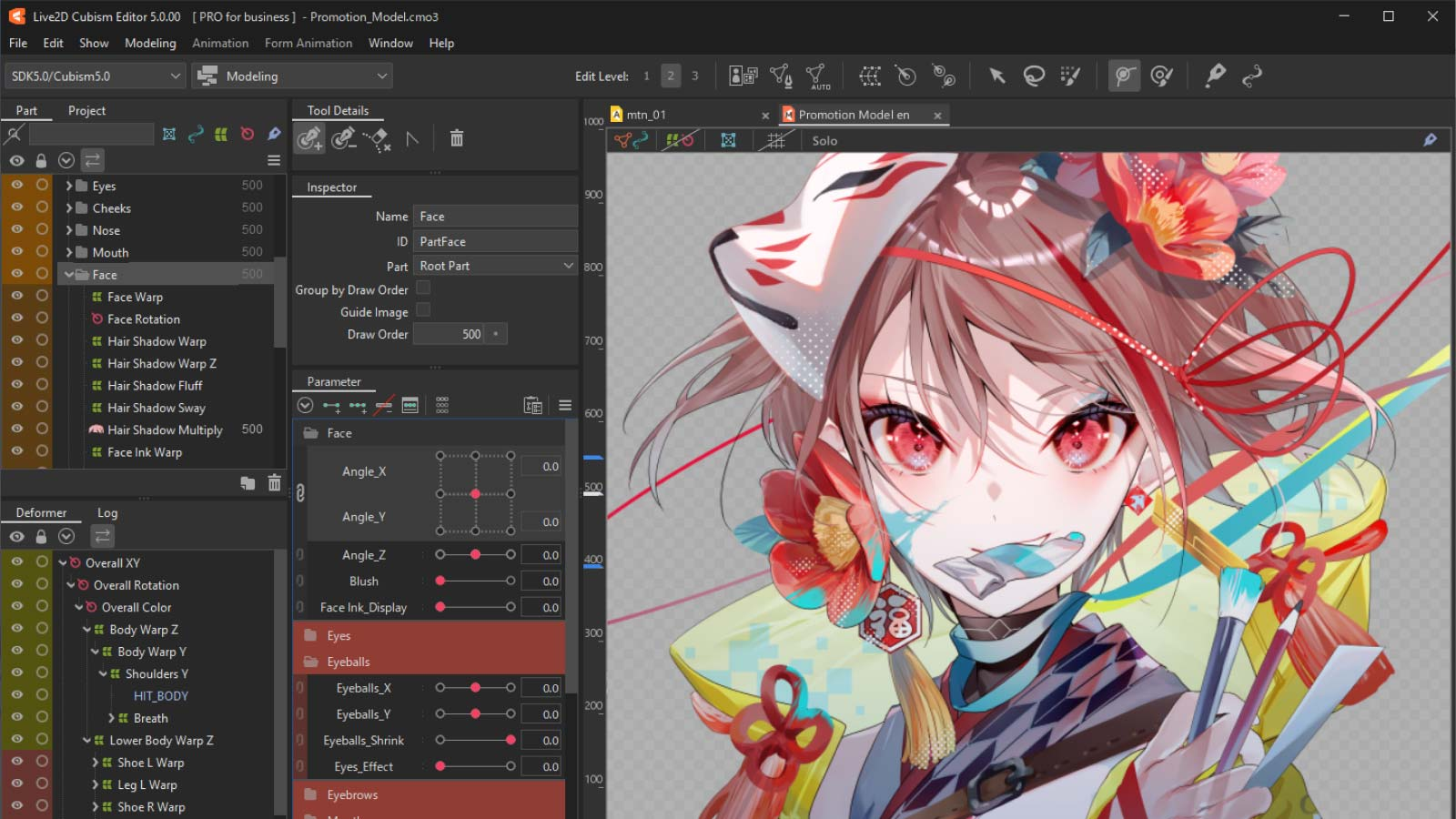
A 3D action RPG introduces a different set of requirements.
Modelers translate the approved concept into a three-dimensional asset. Texture artists develop materials and surface details, while technical artists prepare the model for animation and integration into the game engine.
The character also needs a rig: a system of joints and controls that allows animators to move the model.
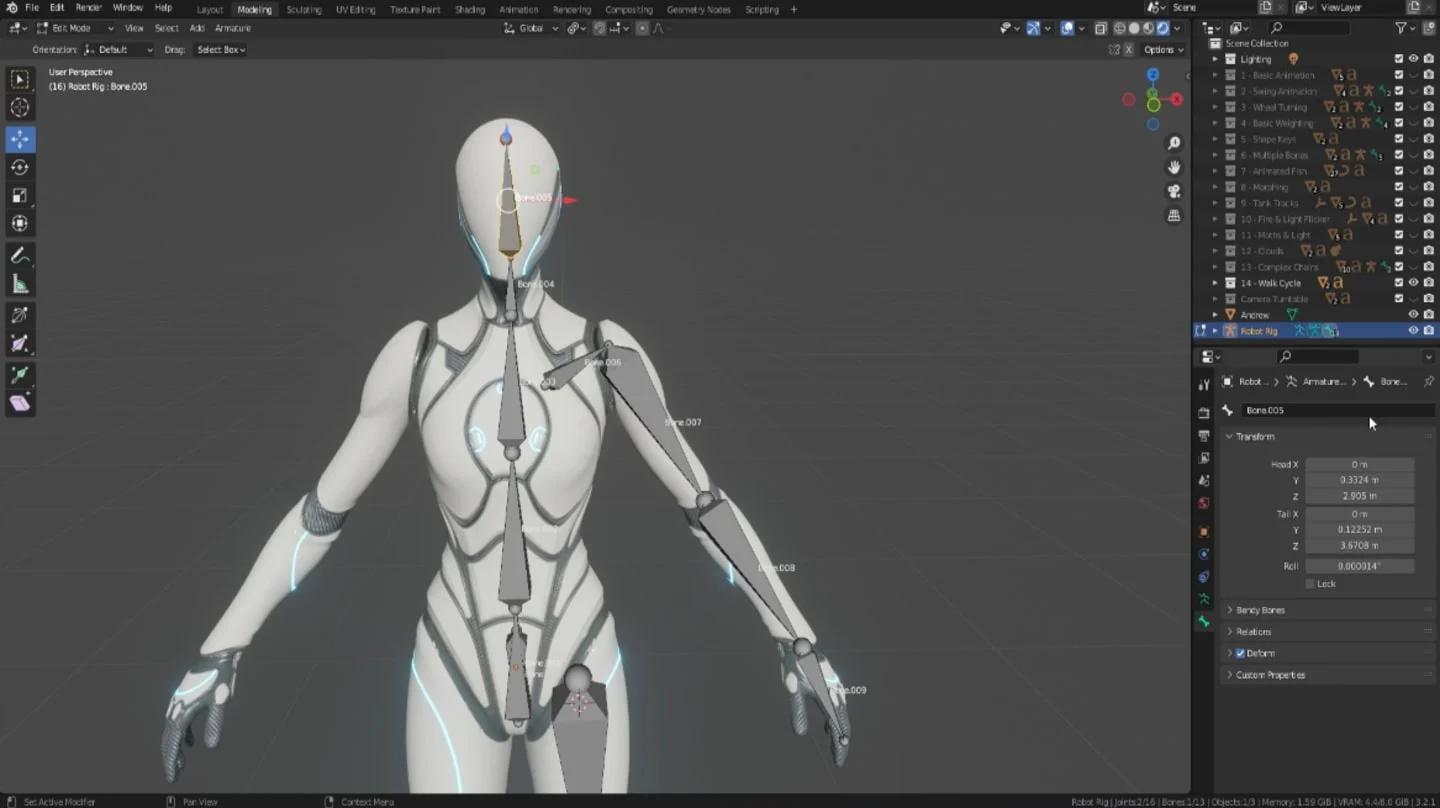
Additional technical work may be required for clothing, hair, facial expressions, and accessories.
A visually complex character can therefore create challenges that extend well beyond the initial modeling process.
And because playable characters must function within an existing game, their assets need to meet technical requirements for performance, memory usage, and compatibility with gameplay systems.
Animation: Making a Character Feel Worth Playing
Animation is where a character begins to develop a recognizable personality through movement.
For a combat-focused gacha game, the animation workload may include walking, running, jumping, dodging, attacking, taking damage, activating special abilities, and transitioning between different states.
Some characters also require unique idle animations, facial expressions, interactions, and cinematic sequences.
The workload becomes more complicated when abilities involve multiple animation stages or interactions with other characters.
Animators may work alongside gameplay designers and programmers to make sure actions feel responsive, attacks communicate their timing clearly, and movement works correctly within the combat system.
This distinction matters because an impressive animation isn't automatically a functional gameplay animation.
A character might look spectacular in a promotional video but still require extensive implementation and testing before those movements work reliably during actual combat.
Studios may also use motion capture for certain performances, although that introduces its own production, cleanup, and integration requirements.
Visual Effects and Audio: Making Every Ability Feel Distinct
A playable character's combat presentation isn't created through animation alone.
Visual effects artists may produce elemental attacks, particle effects, lighting treatments, impact flashes, and other visual details that communicate the character's abilities.
Sound designers create or select effects for attacks, movement, impacts, equipment, and special skills.
Composers may contribute music associated with a character, while cinematic teams can produce promotional sequences or story scenes.
These elements need to work together.
An elaborate ultimate ability might involve synchronized animation, visual effects, sound effects, camera movement, gameplay logic, and performance optimization.
Even relatively small changes can create additional work across several departments.
If designers revise the timing of an ability, the animation, effects, audio, and gameplay implementation may all need adjustments.
That coordination is part of the cost of producing polished character content.
Voice Acting: Why Multilingual Production Adds Another Layer
Voice acting is another expense that can vary considerably between gacha games.
Some titles use limited voice performances, such as short battle lines and character introductions.
Others feature fully voiced story sequences, character quests, combat dialogue, and promotional material.
A game offering Japanese, Chinese, Korean, and English (usually the standard four) voiceovers may need separate casting, recording, direction, editing, and quality assurance processes for each supported language.
The studio must also coordinate script delivery, scheduling, pronunciation guidance, and revisions.
Localization is not simply a matter of translating a finished script word for word.
Dialogue may require adaptation to preserve characterization, tone, cultural context, and natural phrasing.
For example, in an American western a cowboy may say something like:
If you don't put down that iron, I reckon you'll be sleepin' over yonder in a wood bed.
You can translate that obviously, but will players from other countries get the euphemism and know what a "wood bed" means?
Translated text can also affect interface layouts, subtitle timing, and recorded performance requirements.
These expenses depend on the amount of dialogue, the languages supported, contractual arrangements, and the complexity of the production.
A character with a few dozen recorded lines presents a different workload from one appearing throughout a lengthy, fully voiced story chapter.
For studios operating across China, Japan, South Korea, and international markets, multilingual production can become a recurring commitment rather than a one-time launch expense.
Quality Assurance: The Work Players Usually Never See
Even after a character's art, animations, abilities, and dialogue are complete, the character still needs to be tested.
Quality assurance teams check whether attacks function correctly, animations transition properly, effects display as intended, and abilities interact with existing gameplay systems.
In a game with a large roster, a new character may introduce unexpected interactions with previously released characters, equipment, enemies, or combat mechanics.
QA teams will even try to "break" the character in a stress test to avoid any unforeseen bugs.
Performance testing is particularly important for games targeting mobile devices alongside PC or console platforms.
A visually demanding effect that runs smoothly on high-end hardware may require optimization for less powerful devices.
Localization testing also helps identify missing dialogue, incorrect subtitles, formatting problems, and inconsistencies between different language versions.
These tasks don't always receive the same attention as concept art or animation, but they are essential to shipping a reliable update.
How Much Does It Cost to Produce One Gacha Character?
There's no reliable universal price for creating a playable gacha character.
The production cost depends on the character's complexity, the game's technology, the amount of content being created, the studio's location, and how much work is performed internally or outsourced.
A character built around a static illustration and a limited number of battle effects may require substantially fewer production resources than a fully animated 3D character with elaborate abilities and extensive multilingual dialogue.
Even within the same game, characters can have different production requirements.
Some may reuse existing animation systems, character skeletons, or technical tools. Others may introduce entirely new mechanics, animations, or visual features.
Studios also benefit from shared production infrastructure. An established character pipeline can make certain tasks more efficient, although maintaining that pipeline still costs money.
For financial modeling, the most useful approach is to estimate the work involved in each production stage rather than assigning every character the same arbitrary price.
Morganyte Interactive • Production Economics
How Much Does One Gacha Character Cost?
Create a hypothetical character production budget. Adjust the production scope and edit individual cost categories to see how the total changes.
Changing currency resets the fictional cost inputs to a different local-currency example. It does not perform an exchange-rate conversion.
HYPOTHETICAL CHARACTER PRODUCTION COST
Sum of the eight editable production categories. No additional markup or hidden multiplier is applied.
Where the Money Goes
What does each production stage include?
Concept art: Visual development, design revisions, character sheets, and approvals.
Illustration or modeling: Final 2D artwork or 3D assets, textures, and materials.
Rigging and animation: Character movement systems, combat animation, expressions, and technical preparation.
Visual effects and implementation: Combat effects, ability integration, and related technical production.
Voice acting and audio: Recording, direction, editing, and sound production.
Localization: Translation, adaptation, and multilingual content preparation.
Testing: Gameplay verification, compatibility testing, bug fixing, and optimization.
Other: Additional direct expenses that are not included in another category.
How should these numbers be interpreted?
All starting values are fictional budget inputs. They are not published estimates of character production costs at any named studio.
Enter costs on a consistent accounting basis. For example, if employee labor is already included in your overall staffing budget, do not add the same labor expense again to the game's total development budget.
The character estimate can represent allocated internal labor, external invoices, or a combination, but the categories must not overlap.
This calculator excludes shared engine development, general studio overhead, marketing, and other expenses unless you deliberately allocate them into the editable fields.
Educational financial model. Results are illustrative and should not be treated as vendor quotes, industry averages, or verified production budgets.
Our interactive model allows readers to adjust hypothetical expenses for concept art, modeling, animation, visual effects, audio, localization, and testing.
These figures are illustrative inputs, not published character production costs from a particular studio.
The calculator also distinguishes between direct production spending and shared development expenses. That's important because a character's total economic cost may include contributions from permanent employees whose salaries are already accounted for in the studio's broader budget.
Adding those salaries again without adjustment would inflate the estimate.
Why Character Production Becomes an Ongoing Financial Commitment
For a traditional single-player game, much of the character production work may be concentrated before release.
A live-service gacha game operates differently.
New characters are often a recurring part of the game's content strategy. Studios must plan future releases, coordinate production schedules, and maintain enough development capacity to support the next update.
That can mean working on multiple characters simultaneously, sometimes long before their public announcements.
It doesn't even stop. Released characters still need maintenance as some may get a new outfit or skin in a new patch. These are usually paid, too, and they have to draw demand or the effort was wasted.

A studio releasing new playable characters regularly needs a dependable pipeline of concept artists, modelers, animators, programmers, voice production specialists, and testers.
If production falls behind schedule, the consequences can affect future content updates and the broader live-service calendar.
This is one reason a gacha game's operating budget can't be understood through server expenses alone.
The studio is doing a lot more than keeping an existing game online.
It's continuously producing new parts of that game while players are already using it.
And while characters may be among the most visible products of that work, another essential system operates behind the scenes: the technology responsible for distributing them through gacha banners.
That's where we'll turn next.
How Much Does the Gacha System Itself Cost to Build?
Gacha programming looks deceptively simple. You press the pull button, an animation plays, and you either win/lose.
From the player's perspective, the entire process might take only a few seconds.
But, the mechanics are a lot more nuanced.
I wrote a massive guide about gacha mechanics which explains all of that if you're interested.
 Nova

Behind that interaction, however, a commercial gacha game may need to coordinate several systems responsible for player accounts, virtual currencies, reward distribution, transaction records, and fraud prevention.
This raises an interesting question.
How expensive is the gacha mechanic itself compared with the technology required to support it?
The answer depends on what we're actually counting.
A basic randomized reward system can be implemented with relatively little code.
A production-ready gacha service involves considerably more engineering, particularly when rewards are connected to purchases, persistent inventories, and long-term player progression.
The Random Number Generator Isn't the Expensive Part
At its simplest, a gacha system selects a reward according to a predefined probability distribution.
Imagine a fictional game with three reward categories:
- Common rewards: 80%
- Rare rewards: 19%
- Ultra-rare rewards: 1%
The software generates a pseudorandom value and uses that value to determine which reward category the player receives.
For example, the game might assign different portions of a numerical range to each category. The generated value determines which portion is selected.
The underlying programming concept is straightforward.
Modern programming languages already provide tools for generating pseudorandom values and working with weighted probabilities. Developers don't need to invent an entirely new branch of mathematics to implement a one-percent drop rate.
The difficult part is making sure the system behaves correctly under every supported condition.
- What happens when a player performs ten summons at once?
- What if a banner guarantees a particular rarity after a certain number of attempts?
- What if a character has a separate probability of being featured?
- What happens when the player receives a duplicate?
Each additional rule introduces logic that must be implemented, verified, and maintained.
Even so, these mechanics are generally only one part of the larger system.
Pity Systems Add Rules, State, and Testing Requirements
Many gacha games use pity systems to limit how long a player can go without receiving certain rewards.
If you've been aroung gacha for even three months, you'll see lots of gamers bitch and moan about pity when a banner drops. Then, out of nowhere a F2P guy jumps off the top rope to dunk on everyone:
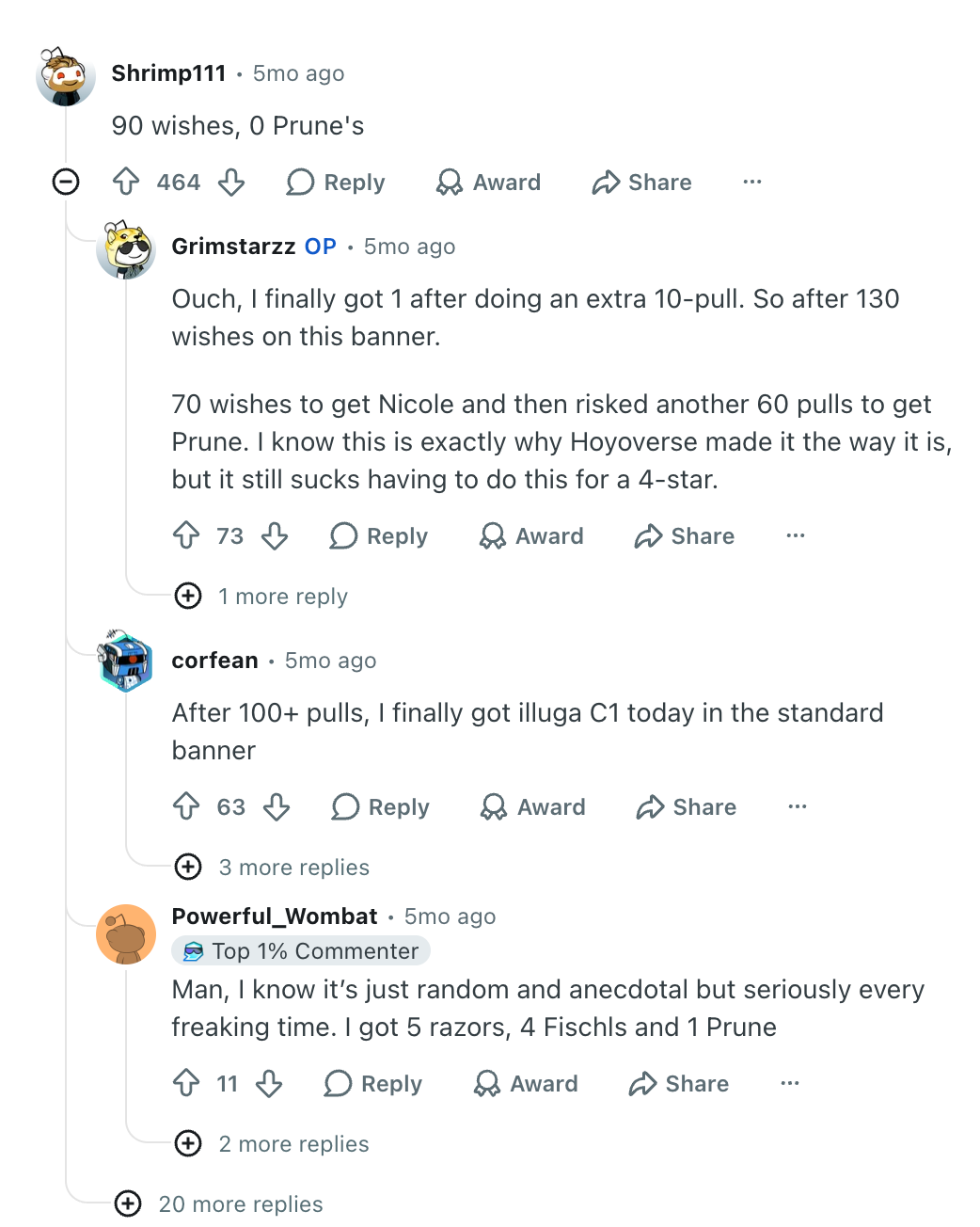
I bitch and moan, too.
To be fair.
Anyway, a hard pity system might guarantee a high-rarity reward after a predetermined number of unsuccessful pulls.
A soft pity system might gradually increase the probability of receiving that reward as the player approaches a threshold.
Other games distinguish between receiving any high-rarity reward and obtaining the specific featured character advertised on a banner.
These mechanics require the game to remember information about previous summons.
A player's pity counter may need to persist between sessions, survive server interruptions, and carry over between eligible banners.
The system must also handle edge cases.
For example, if a player receives a high-rarity character immediately before reaching hard pity, the appropriate counter may reset. If a banner expires, the game needs to apply the correct carryover rules. If multiple banner categories use separate pity systems, their counters must remain independent.
Overall, the complexity is correctly maintaining the rules and player history associated with that probability.
A bug in a pity system can affect rewards that players may have spent substantial amounts of time or money trying to obtain.
And obviously, it's going to piss off a lot of people.
That's why probability systems require careful testing, even when their mathematical foundations are relatively simple.
Server-Authoritative Summons and Player Inventory
In a commercial gacha game, developers generally shouldn't allow an untrusted player device to decide which valuable rewards it receives.
If the client could freely determine its own summon results, attackers might be able to manipulate those results or award themselves unauthorized items.
A common approach is to have the server validate the summon request, determine the reward, and update the player's account.
Think about a player performing a ten-pull.
The system may need to verify that the player has enough currency, check the banner's current configuration, calculate the rewards, update pity counters, deduct the appropriate currency, and record the items added to the account.
These operations need to remain consistent.
If a network interruption occurs after currency is deducted but before the client receives a response, the player shouldn't automatically lose their currency or receive a duplicate reward when the request is retried.
This is why developers use techniques such as transactional database updates, unique request identifiers, and idempotent processing.
In simple terms, the system needs to recognize when a request has already been processed and avoid performing the same purchase or reward operation twice.
The exact architecture differs between games, but the engineering objective is the same: preserve the integrity of player accounts and transactions.
Payment Verification and Premium Currency
Gacha games that sell premium currency introduce another layer of technical requirements.
A purchase may begin through a mobile storefront, PC payment provider, or another supported billing system.
The game then needs to verify the purchase through the appropriate platform or payment service before granting the corresponding currency or entitlement.
Developers must account for failed transactions, delayed confirmations, refunds, duplicate notifications, and potential fraudulent activity.
They also need to distinguish between different types of currency.
A game might award free currency through quests while selling a separate premium currency that can be exchanged for summons.
Those balances may be subject to different restrictions, promotional rules, or accounting requirements.
This doesn't mean the gacha engineer personally decides how much a ten-pull should cost.
Pricing and monetization policies may involve economy designers, product managers, business leadership, publishers, and other decision-makers.
The engineering team's responsibility is to implement the approved rules accurately and securely.
Audit Logs, Probability Verification, and Fraud Prevention
When a game distributes valuable randomized rewards, accurate records become important.
Transaction logs can help developers investigate disputed purchases, account problems, unexpected reward behavior, and suspected exploitation.
Depending on the system, records may include the request identifier, banner configuration, currency transaction, awarded rewards, and relevant pity state.
Developers also need to verify that the implemented probabilities match the intended rules.
This can involve automated testing, statistical simulations, configuration reviews, and monitoring for unexpected outcomes.
For example, a simulation might perform millions of fictional summons to check whether the observed distribution approaches the configured probabilities.
That doesn't guarantee every individual player will experience the average outcome. Randomness naturally produces streaks of good and bad luck.
Instead, statistical testing helps identify implementation errors or unexpected patterns across large numbers of trials.
Security work extends beyond the random reward system itself.
Account protection, authorization checks, rate limiting, monitoring, and safeguards against unauthorized inventory changes may all contribute to the engineering workload.
So How Much Does Gacha Programming Actually Cost?
I don't know.
There's no reliable universal price for building a commercial gacha system.
The cost depends on the game's existing technology, development team, feature requirements, platform integrations, security standards, and the amount of engineering infrastructure already available.
A small studio using established account and payment services may face different implementation requirements from a large publisher operating proprietary infrastructure across several platforms.
Likewise, adding a relatively simple reward system to an existing game is different from developing an entire backend architecture for a new live-service product.
For financial modeling, it's useful to separate the work into several categories:
- Reward selection, banner configuration, and probability rules
- Pity tracking, guarantees, and inventory integration
- Server-side transaction handling and account persistence
- Payment verification and premium currency integration
- Security, testing, monitoring, and administrative tools
Morganyte Interactive • Engineering Explained
What Happens When You Press Summon?
A simplified example of a server-authoritative gacha transaction. Expand each stage to explore the work happening behind a single summon.
The Player Requests a Summon
The client sends a request to the game server identifying the selected banner and summon action. The server authenticates the player and checks whether the request is permitted.
Authentication and API HandlingThe Server Validates the Transaction
The system checks whether the banner is active, whether the account has sufficient currency, and whether the request has already been processed. Invalid requests are rejected.
Currency and Transaction ValidationProbability and Pity Rules Are Applied
The server evaluates the applicable banner configuration, probability rules, pity counters, and guarantees before determining the reward.
Different games may use different reward selection algorithms and pity mechanics.
Probability and Game LogicThe Account Is Updated Consistently
The system deducts currency, records the reward, updates inventory and pity state, and preserves the transaction outcome.
Reliable implementations must prevent partial or duplicated operations, including when requests are retried after network interruptions.
Database Integrity and PersistenceThe Result Is Returned to the Player
The server returns the confirmed reward. The client then displays the appropriate animation and updates the visible inventory.
The animation presents the result; it does not need to be the system that determines it.
Client Presentation and SynchronizationMonitoring and Records Support the System
Transaction records and monitoring help developers investigate errors, unexpected behavior, and potential exploitation.
The exact logging, auditing, and monitoring architecture varies by game.
Operations, Security, and AuditingTechnical note: This is a conceptual workflow, not the internal architecture of a specific game. Some operations may occur together, use different ordering, or rely on distributed services. Real-money purchase verification is a separate workflow from spending currency already held by the player.
The important accounting distinction is that these categories describe engineering responsibilities, not necessarily separate teams or expenses.
A backend programmer might work on inventory management, payments, and summon processing during the same development period. Some infrastructure may also support many other parts of the game.
If those employee costs are already included in the broader staffing budget, they shouldn't be added again as entirely new expenses.
For the same reason, it's misleading to assign an arbitrary percentage of an entire game's budget to its gacha mechanic without knowing how its technology and production resources are allocated.
The Difference Between Building the System and Operating It
Completing the initial gacha implementation doesn't eliminate future engineering expenses.
Live-service games regularly introduce new banners, rewards, characters, progression features, and promotional events.
Those updates may require changes to existing configurations, new functionality, additional testing, or modifications to backend services.
Developers must also maintain compatibility with platform updates, address security vulnerabilities, and investigate technical problems affecting player accounts.
A mature gacha system may become easier to operate as its tools and workflows improve, but it still requires maintenance and oversight.
This is another reason to distinguish initial development costs from ongoing operating expenses.
The random reward mechanic might be one of the simpler pieces of the game. The infrastructure that makes it trustworthy, secure, and sustainable is where the engineering challenge becomes much larger.
And that brings us to the next major expense: the servers, databases, and online services required to keep a gacha game running.
Servers, Infrastructure, and the Cost of Staying Online
A gacha game can be beautifully designed, expertly programmed, and packed with content, but none of that matters if players can't access their accounts.
For many modern gacha games, maintaining an online connection is essential to the experience.
Even games built primarily around single-player combat may depend on remote services for authentication, inventory management, premium currency balances, purchase verification, and account synchronization.
That creates a continuing operational expense.
Studios need infrastructure capable of storing player information, processing requests, distributing updates, and maintaining the availability of essential services.
And they need disaster recovery protocols for all of this, even if they modularize everything to prevent a major failure. Otherwise, a server failure can seriously damage their fanbase.
I still remember when Diablo III crashed on launch day and how fucking angry everyone was about it.
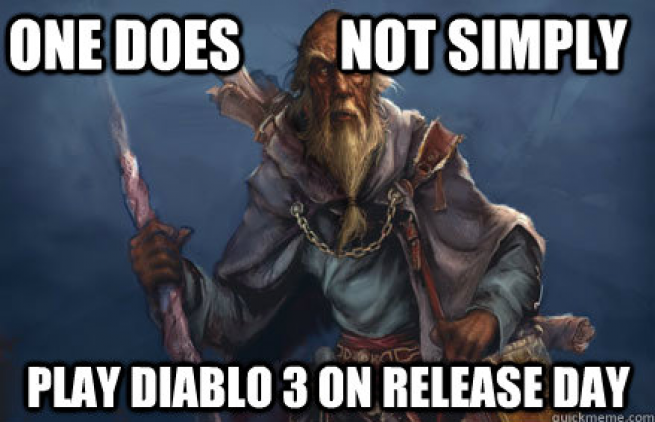
So, how much does all of that cost?
The answer is more complicated than multiplying the number of registered players by an arbitrary server fee.
Why Not Every Gacha Game Needs the Same Infrastructure
Think of two fictional gacha games.
The first is a turn-based mobile RPG where most battles are processed locally on the player's device. The game communicates with its servers to authenticate accounts, record progression, distribute rewards, and synchronize purchases.
The second is a large-scale multiplayer action RPG featuring shared environments, real-time combat interactions, and persistent online activity.
Both require backend infrastructure, but their technical demands are different.
A game that primarily synchronizes account information may need relatively little continuous server-side gameplay processing.
A real-time multiplayer game must also coordinate player actions, maintain synchronized game states, and respond to network activity with sufficiently low latency.
Those requirements can increase computing, networking, and operational complexity.
Even among single-player-oriented gacha games, backend architecture varies.
Some games perform substantial gameplay calculations on the client, while others rely more heavily on server-side validation and processing.
Consequently, the genre itself tells us very little about how expensive a game's infrastructure will be.
The important question is what the servers are responsible for doing.
Registered Players, Active Players, and Concurrent Players
One of the easiest mistakes in estimating server expenses is treating every registered account as an equally active user.
Imagine a gacha game with five million registered accounts.
That doesn't mean five million people are simultaneously connected to the game.
Some accounts may be inactive. Others may belong to players who log in only occasionally. Active players may also be distributed across different regions and time zones.
Three metrics help explain the difference.
- Registered accounts represent the total number of accounts created, although they don't necessarily correspond to unique individuals.
- Monthly active users (MAU) represent accounts or users that meet the game's definition of activity within a month.
- Concurrent users represent players connected at the same time.
Each metric affects infrastructure planning differently.
Registered accounts influence long-term data storage and account management requirements.
Active users help indicate how frequently backend services may be accessed.
Concurrent users are especially important when estimating peak processing capacity, connection handling, and the resources required to maintain service during busy periods.
A game with millions of registered accounts might experience relatively modest simultaneous activity. Another game with a smaller audience could face significant traffic spikes during a major update.
That distinction matters because infrastructure must be capable of handling actual demand, not simply the largest audience figure used in a marketing announcement.
Cloud Hosting, Databases, and Account Services
A gacha game's online infrastructure usually consists of more than one server.
Studios may operate application servers that handle requests, databases that store account information, authentication services that manage player access, and systems that record inventory changes or currency transactions.
Additional services may support analytics, error reporting, customer support, security monitoring, and administrative operations.
Some companies manage portions of this infrastructure themselves. Others rely on cloud providers or specialized third-party services.
Cloud platforms can provide flexible computing resources, allowing studios to increase or reduce capacity as demand changes.
However, cloud spending is not limited to renting computing power.
Costs can include database operations, storage, network traffic, monitoring, managed services, backups, and technical support.
The billing model matters, too.
A studio paying for reserved capacity may face a different cost structure from one using services billed according to requests, processing time, or data transferred.
For that reason, two games serving similar audiences can incur very different infrastructure expenses.
Data Transfer and Content Delivery
Gacha games regularly distribute new assets.
Character models, illustrations, voice recordings, story content, animations, and game updates all need to reach players.
Large updates can create substantial download traffic, particularly when millions of players install new content around the same time.
Seriously, imagine the bandwidth required to process thousands of user download traffic simultaneously when a patch drops.
Studios commonly use content delivery networks, or CDNs, to distribute files efficiently across different geographic regions.
A CDN stores or delivers content through a network of servers, helping reduce the distance between players and the files they're downloading.
But delivering data still has a cost.
Depending on the provider and contract, studios may pay according to the amount of data transferred, the number of requests, geographic delivery regions, or other usage factors.
Consider a hypothetical update that requires each of one million players to download five gigabytes of new data.
That represents approximately five million gigabytes, or five petabytes, of total downloads before accounting for retries, compression differences, cached content, and other factors.
The calculation doesn't tell us the final bill. That depends on the studio's distribution arrangements and actual transfer charges.
It does illustrate why content delivery can become a meaningful operating expense for large games.
The frequency and size of updates therefore matter alongside the number of active players.
Why Major Updates Can Create Infrastructure Spikes
A gacha game's traffic isn't necessarily consistent throughout the month.
Player activity may increase when a new region launches, a highly anticipated character becomes available, or a major story update arrives.
Those events can create simultaneous demand for authentication, account synchronization, banner transactions, downloads, and other online services.
A studio needs to plan for these peaks.
Depending on the architecture, it may temporarily increase computing capacity, distribute traffic across additional services, or use queues and other mechanisms to manage demand.
Infrastructure designed only around average daily activity may struggle during major releases.
On the other hand, maintaining excessive unused capacity throughout the year can increase expenses unnecessarily.
The financial challenge is finding a balance between reliability and efficiency.
Security, Backups, and Disaster Recovery
Player accounts and purchase records are valuable operational data.
Studios need to protect that information against unauthorized access, technical failures, and accidental loss.
This can involve authentication safeguards, encryption, access controls, monitoring, backup systems, and disaster recovery procedures.
Security measures may also help protect the game against automated abuse, fraudulent requests, and attacks intended to disrupt online services.
Backups introduce additional storage and operational requirements.
A company may retain multiple copies of important data, establish recovery procedures, and test whether critical systems can be restored after an incident.
These activities create expenses that aren't always visible to players.
However, reducing them simply to save money can introduce serious operational risks.
An infrastructure budget should therefore account for resilience and security rather than treating them as optional extras. People are spending actual money in these economies, meaning hackers are always licking their chops somewhere.
How Much Do Gacha Game Servers Cost Per Month?
There's no credible average monthly server cost for a gacha game.
A small title with limited online processing may have a relatively modest infrastructure footprint, while a large cross-platform game with substantial real-time activity, global distribution, and frequent content updates can require a much larger operational investment.
Even then, a game's total infrastructure bill depends on its architecture, service providers, negotiated rates, traffic patterns, and operational requirements.
For a useful financial model, we can divide monthly infrastructure spending into several categories:
- Application servers and backend computing
- Databases, storage, and backups
- Network traffic and content delivery
- Authentication, security, and monitoring
- Additional managed services and operational tools
Morganyte Interactive • Infrastructure Economics
Estimate Monthly Server and Infrastructure Costs
Build a hypothetical infrastructure budget. Enter estimated monthly expenses in USD to see how hosting, storage, security, and content delivery affect costs.
ESTIMATED MONTHLY INFRASTRUCTURE COST
Monthly Cost Breakdown
How does this calculator work?
Monthly fixed and entered service expenses equal the sum of application computing, databases, security, managed services, and content delivery.
Additional variable expenses equal monthly active users multiplied by the entered variable cost per active user.
Total monthly cost equals fixed and entered service expenses plus additional variable expenses.
Annual cost is calculated by multiplying the monthly total by twelve. This assumes identical spending every month and does not automatically model seasonal traffic spikes.
Average cost per active user equals monthly infrastructure spending divided by monthly active users. It is an accounting ratio, not the incremental cost of one new player.
What's excluded from this estimate?
The model excludes internal engineering salaries, game content production, advertising, customer support labor, taxes, and other business expenses.
Entered costs should not overlap. For example, if your managed service estimate already includes database hosting, avoid entering that same database expense separately.
Actual cloud costs depend on usage, architecture, regional pricing, negotiated agreements, and capacity requirements.
All starting values are fictional modeling assumptions. They are not cloud-provider quotes or industry benchmarks. Currency: USD.
Our calculator allows readers to enter hypothetical monthly expenses for these categories and see how they accumulate over a year.
It also includes a simplified per-active-player calculation.
That figure should be understood as an accounting ratio, not a universal infrastructure pricing formula.
For example, dividing a $50,000 monthly infrastructure bill by 100,000 monthly active users produces an average of $0.50 per active user.
But it doesn't mean adding one more player automatically increases the bill by fifty cents.
Some infrastructure expenses remain relatively fixed until capacity limits are reached, while others change according to usage.
Infrastructure Costs Aren't the Entire Live-Service Budget
It's important not to confuse the cost of operating servers with the total cost of operating a gacha game.
A studio might spend money on cloud services, databases, and content delivery while also employing artists, programmers, writers, designers, customer support staff, and community managers.
Those employees represent a separate and potentially substantial expense.
Similarly, the cost of producing a new story chapter isn't the same as the cost of distributing that chapter to players.
The production team creates the content. The infrastructure helps deliver and support it.
Both are necessary, but they belong to different parts of the budget.
This distinction will become particularly important when we examine ongoing live-service spending.
A gacha game doesn't need servers simply because it uses randomized rewards. It needs infrastructure because it's operating a persistent digital service, often for a global audience.
And getting that service into the hands of enough players introduces another major expense: marketing and user acquisition.
Marketing, User Acquisition, and Launch Costs
Now, here's my true expertise.
Let's talk about marketing.
Imagine spending three years developing a gacha game.
Your team has created dozens of characters, implemented the combat system, built the backend infrastructure, and prepared enough content to support the first several updates.
The game is finally ready to launch.
There's just one problem.
Players need to know it exists.
In a crowded mobile and live-service gaming market, releasing a game doesn't guarantee that anyone will discover it.
Studios compete for attention through advertising, social media, trailers, influencer partnerships, convention appearances, storefront promotions, and community-building campaigns.
For example, major gacha games regularly make appearances at conventions like Tokyo Game Show, where elaborate booths featuring life-size character statues, professional cosplayers, interactive displays, and exclusive merchandise can cost hundreds of thousands of dollars.

Once booth rentals, construction, staffing, travel, and logistics are factored in, some of the most extravagant setups can exceed $1 million for a single event.
All of that takes money.
And depending on the scale of the launch, marketing can become one of the largest expenses outside the development team itself.
Marketing Starts Long Before Launch Day
A gacha game's marketing campaign often begins well before the public can download it.
Early promotional activity may include teaser websites, character reveals, gameplay trailers, social media accounts, community events, and registration campaigns.
You can see the marketing pipeline bubbling for this new game I've been following on YouTube called Fenestra: my focus, her future
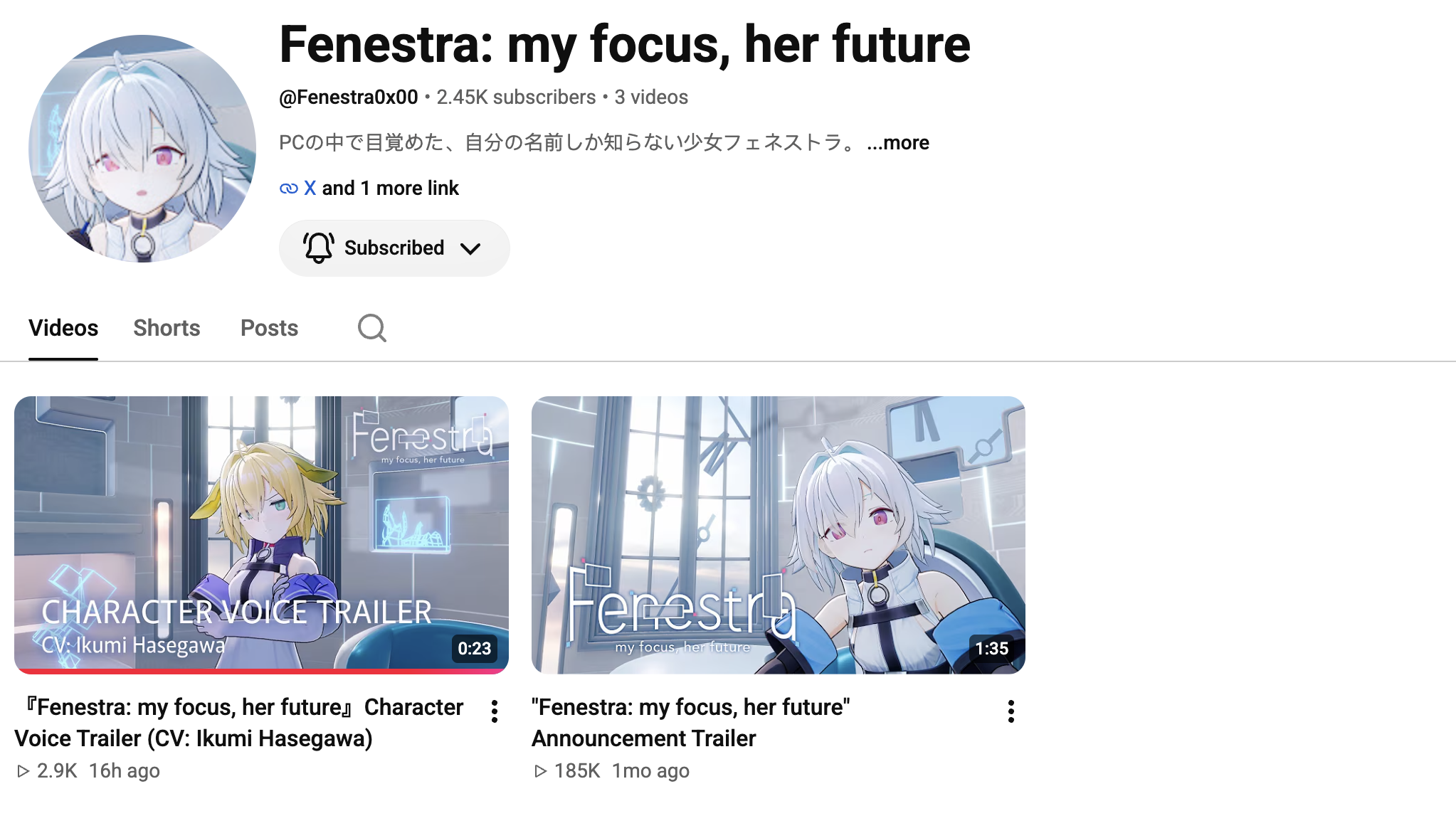
The goal is to build awareness and give potential players a reason to follow the project.
For character-driven games, marketing can also become closely tied to the production pipeline.
A studio might reveal a new character through illustrated artwork, a short animated trailer, a voice actor announcement, or a gameplay demonstration.
Those promotional assets require their own production work.
Some may reuse existing game assets, while others involve additional illustration, animation, video editing, music, or localization.
Studios must therefore decide how to account for promotional content that overlaps with game production.
If a trailer is created specifically for an advertising campaign, its cost belongs in the marketing budget. If the same cinematic is also part of the game, the company needs a consistent method of allocating shared expenses.
Otherwise, the same work could accidentally appear twice in a development cost estimate.
Paid Advertising and the Cost Per Install
Mobile game publishers often use paid advertising to acquire new players.
These campaigns may appear on social platforms, video services, mobile advertising networks, or other digital channels.
One common metric is cost per install (CPI).
CPI measures how much advertising money a company spends for each attributed installation.
The basic formula is:
Cost per install = Advertising spend ÷ Attributed installs
Suppose a fictional publisher spends $200,000 on a campaign that generates 100,000 attributed installs.
Its calculated CPI is $2.
That doesn't mean every new player cost exactly $2 to acquire. It means the campaign's total spend divided by the attributed installs produces an average of $2 per install.
Actual CPI varies with factors such as advertising platform, geographic market, creative quality, audience targeting, competition, and campaign timing.
More importantly, CPI tells us very little about whether those players will remain active or spend money.
A cheap installation isn't automatically a valuable acquisition.
Why Customer Acquisition Cost Is Different From CPI
Cost per install is useful for measuring certain mobile advertising campaigns, but it isn't the same as the cost of acquiring a paying customer.
A player might install a gacha game, complete the tutorial, and never return.
Another might play regularly for months without spending anything.
A smaller group may eventually make purchases.
If a studio wants to estimate how much it spends acquiring paying customers, it needs to account for the percentage of acquired players who actually convert.
For example, imagine a fictional campaign with the following results:
- Advertising spend: $200,000
- Attributed installs: 100,000
- Paying players acquired: 4,000
The campaign has a $2 CPI.
But dividing the same $200,000 by 4,000 paying players produces a $50 advertising cost per acquired payer.
That's a much different number.
It's also important to define the measurement period. A player who doesn't spend during the first week may become a paying customer later.
Studios therefore need consistent attribution rules and observation windows when comparing campaigns.
Downloads Don't Pay the Bills. Player Retention Matters.
Gacha games are typically designed around ongoing engagement.
Players may return for daily activities, limited-time events, story updates, character banners, and other recurring content.
The more you login, the more engaged you seem.
The more engaged you seem, the better the studio will determine you like the product.
The more you supposedly like the product, the likely you are to buy something.
Again, and again, and again.
That makes retention especially important.
A studio that attracts a large audience but loses most of those players shortly after launch may struggle to recover its marketing investment.
Retention is commonly measured over specific periods.
Day-one retention examines how many players return after their initial experience.
Day-seven and day-thirty retention help studios understand whether players continue engaging beyond the first few sessions.
The exact definitions depend on the analytics system, including how it handles calendar days, time zones, and player cohorts.
For our purposes, the financial lesson is straightforward.
Marketing brings players into the game. Retention determines how many remain long enough to contribute to its ongoing success.
A studio can sometimes improve the economics of user acquisition by making the game itself more engaging rather than simply increasing its advertising budget.
That can involve better onboarding, clearer progression, stronger technical performance, or a more compelling early-game experience.
Finally, marketing doesn't end even if a player loses interest. It's why if you stop playing a gacha game after say, three months, your account is going to get flagged for inactivity and this will trigger a win-back campaign.
Influencers, Content Creators, and Community Marketing
Paid advertising isn't the only way to attract players. And, thank god, because paid advertising is super expensive.
Gacha publishers also use content creator partnerships, livestreams, preview events, social campaigns, and community engagement.
A creator might introduce the game to an audience already interested in RPGs, anime-style characters, or other live-service titles.
These partnerships can involve direct sponsorship payments, production support, event expenses, or other agreed compensation.
Their effectiveness depends on factors such as audience fit, campaign execution, and whether viewers are motivated to try the game.
Not every creator partnership produces easily measurable installations.
Some campaigns primarily increase awareness, encourage community discussion, or support an upcoming content release.
Studios may also invest in community management, moderation, player communications, and promotional events.
Those expenses can continue after launch, particularly when the game relies on a regular update schedule.
This creates an interesting catch-22 as influencers and partnerships can generate awareness and it can still be very hard to see the ROI from it.
Even after launch, studios experiment with brand partnerships through merchandise and whatnot. It's an ongoing cycle of keeping their game relevant and trying to cross-pollinate towards other genres.
Global Launches Create Additional Marketing Costs
A game launching across China, Japan, South Korea, North America, and Europe may need different marketing strategies for each market.
Advertising channels, platform ecosystems, audience expectations, and promotional practices vary.
Studios may produce localized trailers, promotional graphics, social posts, websites, and advertising copy.
They may also work with regional agencies or publishing partners familiar with local platforms and communities. Businesses regularly do this when releasing products to other cultures and countries.
Game studios are no different.
This introduces an important distinction between translating marketing materials and adapting a campaign for a particular audience.
A character trailer that performs well in one market might require a different promotional approach elsewhere.
The cost of a global launch therefore depends on more than the number of supported languages.
It also depends on how extensively the publisher chooses to market the game in each region.
How Much Should a Gacha Game Spend on Marketing?
There's no universal marketing budget that guarantees a successful gacha launch.
A small studio with an existing community might prioritize organic promotion and carefully targeted advertising.
A major publisher launching an ambitious cross-platform RPG could invest in extensive promotional campaigns across multiple markets.
The appropriate budget depends on the game's scope, financial resources, audience, competitive environment, and commercial objectives.
A useful model starts with the relationship between spending and measurable outcomes.
For paid user acquisition, we can estimate how many installations a particular budget might generate under a hypothetical CPI.
We can then model how many of those players become paying customers and how much revenue they might generate during a defined period.
Morganyte Interactive • Marketing Economics
Can Your Gacha Marketing Campaign Pay for Itself?
Adjust a fictional advertising campaign to see how installs, paying-player conversion, and revenue affect the campaign's financial outcome.
Choose a consistent revenue observation period when entering revenue per payer, such as the first 90 days after acquisition. The model assumes all acquired installs belong to the same campaign cohort.
MODELED CAMPAIGN CONTRIBUTION
How are the estimates calculated?
Attributed installs: Advertising budget divided by cost per install.
Paying players: Installs multiplied by the paying-player conversion rate.
Gross player revenue: Paying players multiplied by revenue per paying player during the modeled period.
Revenue after deduction: Gross revenue multiplied by one minus the entered platform/distribution deduction rate.
Campaign contribution: Revenue after deduction minus advertising spending and additional creative costs.
Break-even revenue per payer: Total campaign spending divided by the number of paying players and the retained revenue percentage. This is unavailable when there are no payers or the deduction is 100%.
What does this model leave out?
This simplified model does not include game development, live operations, taxes, refunds, payment processing charges, customer support, or additional variable service costs.
The platform/distribution percentage is an editable assumption, not a claim that every game pays the same rate.
The model also assumes that the selected conversion rate and revenue per payer apply to the acquired cohort. Real results depend on attribution, retention, regional differences, and player behavior.
A positive campaign contribution is not equivalent to overall game profitability.
Educational financial model. All starting assumptions are fictional, not industry averages or predictions of real campaign performance. Currency: USD.
The calculator below lets readers experiment and play around with these assumptions.
It isn't a forecast of how real players will behave. Instead, it demonstrates how changes in advertising efficiency, conversion rates, and revenue per payer can affect the financial outcome of a campaign.
It also distinguishes between revenue generated by acquired players and the amount remaining after an assumed platform or distribution deduction.
That matters because a publisher doesn't necessarily retain every dollar players spend.
Why Revenue per Player Matters More Than Install Counts Alone
Another useful metric is average revenue per user (ARPU).
For a defined group of players and a defined period, ARPU is calculated by dividing total revenue by the number of users in that group.
A related metric, average revenue per paying user (ARPPU), divides revenue by the number of paying users.
These measurements answer different questions.
- ARPU reflects revenue across both paying and non-paying users.
- ARPPU focuses specifically on the players who spend money.
Neither metric should be confused with lifetime value (LTV).
LTV attempts to estimate the value a customer generates over a longer relationship with the game.
For user acquisition decisions, a studio needs to compare acquisition spending with the revenue or contribution margin expected from the players it acquires.
That requires assumptions about retention, future purchases, platform deductions, and other variable costs.
A campaign can appear unprofitable after thirty days but recover its costs over a longer period if enough players remain active and continue spending.
The opposite is also possible.
Strong launch revenue doesn't guarantee that acquired players will remain profitable over time.
A Successful Launch Is Only the Beginning
Marketing doesn't necessarily stop once a gacha game becomes available.
New character banners, story chapters, anniversaries, collaborations, and major updates can all create opportunities for additional promotional campaigns.
A studio may spend money reacquiring inactive players, introducing the game to new audiences, or supporting the launch of major content.
These campaigns become part of the game's continuing operating expenses.
That's why it's useful to distinguish between a one-time launch marketing budget and recurring live-service marketing.
Both affect how much money a gacha game needs to earn before it becomes financially sustainable.
A game can be expensive to build, expensive to operate, and expensive to grow.
And once players begin arriving, the studio faces its next challenge: producing enough new content and maintaining enough operational support to keep the game running for years.
Now, we're venturing into business forecasting and economics.
See, how complicated this is?
The Game Has Launched. Now the Real Spending Begins.
For a traditional single-player game, launch day often marks the end of the most expensive phase of development.
The game ships, the studio addresses bugs, and the team may begin moving toward downloadable content, a sequel, or another project.
A live-service gacha game follows a different financial model.
Launch day marks the beginning of an ongoing commitment to players.
The studio must keep the game functioning, maintain its systems, respond to problems, and produce enough new content to give its audience reasons to return.
That means continuing to spend money long after the initial development budget has been exhausted.
And depending on the game's ambitions, those recurring expenses can be substantial.
Live-Service Games Need Permanent Development Teams
A gacha game's launch doesn't eliminate its need for artists, programmers, writers, designers, or testers.
Those employees may shift from building the initial release to maintaining the game and producing future updates.
Some teams focus on new content, while others handle technical maintenance, bug fixes, performance improvements, and ongoing operational support.
For a large game, multiple teams may work on different updates simultaneously.
One group could be preparing the next playable character while another develops a future story chapter. Meanwhile, engineers might be improving backend services, and quality assurance teams could be testing content scheduled for an upcoming release.
These activities overlap because live-service development rarely happens one update at a time.
A studio needs enough production capacity to release content regularly while also preparing material that won't appear for several months.
The result is an ongoing payroll commitment, not a temporary post-launch expense.
New Characters Are Recurring Production Costs
As we discussed earlier, creating a playable character can involve concept art, modeling, animation, visual effects, audio, gameplay implementation, and testing.
After launch, those expenses become part of the game's recurring content budget.
A studio releasing new characters regularly must keep its production pipeline active.
That may include permanent employees, outsourced specialists, external animation partners, recording studios, and localization providers.
Sometimes, power creep happens and you do have to revisit past characters. Zenless Zone Zero (ZZZ) does this regularly by offering agent enhancements for OG agents:
The workload can also vary between releases.
A character that reuses established animation systems and gameplay mechanics may require less work than one introducing an entirely new combat style.
Some updates may include several characters, while others focus on reruns or existing content.
This means the cost of character production isn't necessarily identical every month.
For financial planning, studios may average irregular production spending across a longer period to understand the ongoing resources required.
However, that average should not be mistaken for a fixed monthly invoice.
Story Updates, Events, and New Environments
Characters are only one part of a gacha game's content schedule.
Depending on the title, updates may introduce new story chapters, limited-time events, enemies, equipment, environments, quests, and gameplay modes.
A large expansion can require work across nearly every creative department.
Writers develop the narrative. Artists create environments and visual assets. Designers build encounters and progression systems. Programmers implement new features. Audio teams produce dialogue and sound, while testers verify that everything functions correctly.
Some content can reuse existing assets or systems.
Other updates require entirely new technology, environments, or mechanics.
The difference affects cost.
A small event built around existing locations may be less resource-intensive than an expansion introducing a new explorable region.
This is why comparing two gacha games solely by how frequently they update can be misleading.
Nonetheless, update frequency tells us how often content arrives. It doesn't tell us how much that content costs to produce.
Why Update Schedules Create Financial Pressure
Live-service studios typically plan content releases in advance.
A predictable schedule helps coordinate production, testing, localization, marketing, and platform submissions.
It also gives players a clearer sense of when to expect new content.
But maintaining that schedule creates operational pressure.
If a major update takes longer than expected, the studio may need to adjust production priorities, delay content, or devote additional resources to resolving problems.
Hiring more developers isn't always an immediate solution.
New employees require onboarding, and some tasks cannot be accelerated simply by assigning additional people.
Studios therefore need to balance their content ambitions against the capacity of their teams.
An update schedule that looks manageable during early planning may become difficult to sustain if production requirements expand or unexpected technical problems emerge.
This is particularly relevant for smaller studios with limited staffing and financial reserves.
Customer Support, Community Management, and Moderation
Not every live-service expense involves creating new game content.
Players need assistance with account access, purchase problems, technical errors, and other issues.
Customer support teams investigate those requests and coordinate with technical departments when necessary.
Community managers communicate updates, collect feedback, organize announcements, and help maintain relationships between the studio and its audience.
Moderation may also be necessary for official communities, social channels, and multiplayer features.
A globally distributed audience can introduce additional requirements.
Studios may need multilingual support, region-specific communications, and coverage across different time zones.
These functions are part of operating a live service, even though they don't directly create new characters or gameplay features.
Maintenance, Security, and Platform Changes
A live game must continue working as technology changes.
Mobile operating systems receive updates. PC hardware and drivers evolve. Console platforms introduce new requirements. Payment providers and third-party services can change their integrations.
Developers may need to update software libraries, address vulnerabilities, fix compatibility problems, and maintain backend systems.
They must also investigate bugs that appear after new content is introduced.
A feature that works correctly during internal testing may behave differently when thousands of players interact with it across a wider range of devices and network conditions.
Technical maintenance is therefore a recurring responsibility.
Some of that work can be anticipated through regular maintenance schedules. Other problems require unexpected intervention.
Studios need enough operational flexibility to handle both.
How Much Does It Cost to Operate a Gacha Game Each Month?
There's not a universal figure for this.
A small mobile title supported by a compact team can have a very different expense structure from a large cross-platform RPG releasing extensive new content.
For budgeting purposes, recurring spending can be divided into several major categories:
- Live-service development staff
- External character and content production
- Servers, databases, and content delivery
- Customer support and community operations
- Recurring marketing and promotional campaigns
- Software services, security, and other operational expenses
Morganyte Interactive • Live-Service Economics
How Long Can Your Gacha Game Stay Online?
Build a fictional monthly operating budget and see how revenue and available funding affect financial runway.
ESTIMATED FINANCIAL RUNWAY
How does the runway calculation work?
Monthly operating expenses equal the sum of all six expense categories.
Net monthly cash burn equals operating expenses minus monthly cash receipts.
If cash burn is positive, runway equals available operating cash divided by monthly net cash burn.
If receipts equal or exceed expenses, the model reports no finite runway limit under the entered assumptions.
The calculation assumes identical receipts and expenses each month. It does not forecast changing banner performance, seasonal demand, or irregular capital expenditures.
What should I include in each category?
Staffing: Fully loaded monthly employment costs for the live-service team.
External production: Outsourced art, animation, audio, localization, or other content work not already included in staffing.
Infrastructure: Hosting, databases, content delivery, monitoring, and related services.
Support: Customer support and community operations not included elsewhere.
Marketing: Recurring advertising and promotional spending.
Other: Additional recurring cash expenses, excluding anything already counted.
Cash receipts: Money available to the studio after the deductions you choose to model. Use a consistent accounting basis.
All default figures are fictional and illustrative. This is a simplified cash-runway model, not a profitability forecast or a statement about actual gacha studio operating costs. Currency: USD.
The calculator below lets readers build a hypothetical monthly operating budget and estimate how long a studio could continue operating with a given amount of available funding.
It also allows them to enter recurring monthly revenue after modeled deductions and refunds.
If ongoing revenue covers some of its expenses, the studio's financial runway can extend considerably.
If revenue covers all modeled operating expenses, the studio may be able to maintain its current spending level without drawing down its starting reserve.
However, the calculator doesn't assume that revenue will remain constant forever.
Real gacha games experience fluctuations in player activity, banner performance, marketing effectiveness, and operating expenses.
Why Financial Runway Matters More Than a Single Good Month
A gacha game can generate substantial revenue during a popular character banner and considerably less during another period.
Meanwhile, many expenses continue regardless of how individual banners perform.
Employees still need to be paid. Servers still need to operate. Future updates still need to be developed.
This creates a financial planning challenge.
A studio cannot safely assume that every month will match its strongest sales period.
It needs enough liquidity to handle weaker revenue periods, production delays, and unexpected expenses.
That's where financial runway becomes useful.
Runway describes how long an organization can continue operating before exhausting its available funding under a particular spending and revenue scenario.
A studio with twelve months of runway has more time to respond to disappointing performance than one with only two months of funding remaining.
However, runway isn't a guarantee of survival.
It depends on the accuracy of the assumptions, the availability of funds, and whether spending or revenue changes over time.
The Hidden Cost of Planning Content Months Ahead
Live-service production also creates timing differences between spending and revenue.
A studio may begin developing a character or expansion months before players can purchase anything associated with that content.
During that period, salaries, outsourcing invoices, and other production expenses continue accumulating.
Revenue associated with the finished update may arrive much later.
That means a studio can have valuable content in development while still facing short-term cash-flow pressure.
The problem becomes more complicated when multiple updates are being developed simultaneously.
Financial planning needs to account for when expenses are paid, not simply when finished content is released.
This is why maintaining sufficient reserves matters even for games that appear commercially successful.
The Long-Term Cost of a Live-Service Game
Suppose a fictional gacha studio spends $1 million per month operating its game.
If those expenses remain constant, the studio would spend $12 million over a year and $36 million over three years.
That's before considering inflation, team expansion, major development projects, or other changes in spending.
The example illustrates how recurring costs accumulate.
It doesn't suggest that $1 million per month is a typical gacha operating budget.
The actual figure could be much lower or substantially higher depending on the game.
The key lesson is that initial development spending represents only part of the financial commitment.
One of the most puzzling things to realize is that a gacha game can be profitable to launch but expensive to sustain.
And to understand whether that investment makes financial sense, we need to examine the question that ultimately determines its viability:
How much revenue does a gacha game need to generate before it actually breaks even?
How Much Money Does a Gacha Game Need to Break Even?
A gacha game can generate millions of dollars in player spending and still fail to recover the money invested in developing it.
That might sound surprising, especially when revenue estimates for popular games circulate across social media.
Going back to our Genshin Impact anecdote, if you think it costs about $100 million to produce (that figure is very likely a lot higher now), you can reasonably expect the game to make far more than that in revenue.
But there's a fundamental difference between how much money players spend and how much money a studio ultimately earns.
There's also a difference between earning enough to cover this month's expenses and recovering several years of development costs.
To understand the economics of a gacha game, we need to look beyond revenue headlines.
The real question is how much money the game must retain, over time, to recover its total investment.
Gross Revenue Isn't the Same as Money the Studio Keeps
Suppose players spend $10 million on a fictional gacha game in a particular month.
That figure represents gross player spending under our simplified example.
It doesn't necessarily mean the developer receives $10 million.
Depending on the platforms and payment arrangements involved, portions of that spending may go toward storefront commissions, payment processing, taxes, refunds, or other deductions.
A game distributed through multiple storefronts may also face different commercial terms on each platform.
For example, the economics of purchases made through a mobile app store may differ from purchases made through a PC storefront or an authorized direct-payment channel.
Publishing agreements introduce another complication.
A developer working with an external publisher may receive revenue according to a contractual arrangement involving recoupment, revenue sharing, or other financial terms.
Those arrangements vary considerably.
As a result, publicly reported player spending cannot automatically be treated as developer revenue, much less developer profit.
For financial modeling, we need to define how much of the reported spending actually becomes revenue available to the studio.
Platform Fees, Taxes, Refunds, and Publishing Agreements
One of the most common mistakes in game revenue discussions is applying a single platform fee to every dollar of revenue.
A game may earn money across mobile, PC, console, and other supported channels, each with its own commercial arrangements.
Even within one platform, effective fees can depend on applicable programs, transaction types, regional rules, and negotiated terms.
Taxes also require careful treatment.
Sales taxes and value-added taxes collected from customers are not necessarily revenue belonging to the developer.
Refunds and chargebacks can reduce the amount ultimately retained.
Publisher payments introduce additional complexity because the developer and publisher may not recognize or receive revenue in the same way.
For our simplified model, we'll combine applicable deductions into one editable percentage.
That makes the calculations easier to follow, but it should not be interpreted as a universal platform commission.
A more detailed financial forecast would model each distribution channel and contractual arrangement separately.
Recovering Development Costs Takes Time
Imagine a fictional studio spends $30 million developing a gacha game.
It then spends another $10 million preparing and marketing the launch.
By release day, the project has accumulated $40 million in investment.
Now suppose the game generates $5 million in gross player spending each month.
If the studio retains 70% of that spending after our modeled deductions, it receives $3.5 million per month before paying ongoing operating expenses.
Let's assume those expenses total $2 million per month.
That leaves $1.5 million in monthly operating contribution.
At that constant rate, recovering the original $40 million investment would take approximately 26.7 months after launch.
That's more than two years.
And the calculation assumes revenue and operating expenses remain unchanged throughout the entire period.
Real games rarely behave so predictably.
Banner performance, player retention, advertising spending, staffing requirements, and content production costs can all change.
A strong launch might accelerate cost recovery. Declining player activity could delay it indefinitely.
The example demonstrates why high monthly revenue doesn't automatically mean a studio has recovered its investment.
Operating Break-Even vs. Full Investment Break-Even
Time to get into some business and financial principles, students.
There are two useful financial milestones to distinguish here.
Operating break-even occurs when the revenue retained during a period is sufficient to cover the operating expenses assigned to that period.
For example, a game receiving $3 million per month after modeled deductions and spending $3 million per month on operations has reached operating break-even under that simplified calculation.
But it hasn't necessarily recovered the money spent building and launching the game.
Full investment break-even occurs when cumulative contribution after operating expenses has recovered the project's initial investment.
That includes the development and launch costs included in the financial model.
A game can reach operating break-even relatively quickly while taking years to reach full investment break-even.
It can also operate above break-even for a period and later return to a monthly loss if revenue falls or expenses increase.
This is why profitability needs a clearly defined time period and accounting basis.
How Much Revenue Does a Gacha Game Need to Break Even?
The answer depends on three major variables.
First, how much money was invested before launch?
Second, how much does the game cost to operate each month?
Third, what percentage of player spending becomes revenue available to cover those costs?
The basic relationship is:
Monthly contribution = Retained monthly revenue − Monthly operating expenses
And:
Cumulative unrecovered investment = Initial investment − Cumulative contribution
If monthly contribution remains positive and constant, the studio can estimate how long it would take to recover its initial investment.
If monthly contribution is zero or negative, the game cannot recover its initial investment under those unchanged assumptions.
That doesn't mean recovery is impossible.
It means something would need to change, such as revenue, operating expenses, or additional sources of income.
Morganyte Interactive • Revenue Economics
When Will Your Gacha Game Break Even?
Adjust a hypothetical game's development investment, player spending, deductions, and monthly expenses to estimate its break-even timeline.
ESTIMATED FULL INVESTMENT BREAK-EVEN
Initial investment recovered after 12 months
0%
How is break-even calculated?
Retained revenue: Gross monthly player spending multiplied by one minus the entered deduction percentage.
Operating contribution: Retained revenue minus monthly operating expenses.
Full investment break-even: Initial investment divided by positive monthly operating contribution.
Operating break-even spending: Monthly expenses divided by the retained revenue percentage.
24-month target spending: Monthly expenses plus one twenty-fourth of initial investment, divided by the retained revenue percentage.
All calculations assume constant monthly spending and expenses.
What does this model exclude?
This model simplifies platform and distribution deductions into one percentage. It does not separately calculate taxes, refunds, publishing arrangements, financing costs, or accounting differences unless the user includes them consistently in the inputs.
It also assumes all initial development and launch spending has been included in the initial investment field.
The model measures recovery of a defined investment, not a complete financial statement, discounted cash flow, or investor return.
Educational financial model. All starting values are fictional and are not verified studio financial figures or predictions. Currency: USD.
Our interactive calculator lets readers adjust the initial investment, monthly gross player spending, deductions, and operating expenses.
It then estimates the monthly contribution, operating break-even revenue, and time required to recover the initial investment.
Because the model uses constant monthly assumptions, the results are scenarios rather than forecasts.
Why Revenue Estimates Can Be Misleading
Public discussions about gacha game revenue often rely on third-party estimates.
Those estimates can be useful for understanding relative commercial performance, but their coverage and methodology matter.
That's why I'm against fueling this fire with more unfounded estimates in this piece.
A service tracking mobile in-app purchases may not capture spending through PC clients, console storefronts, direct-payment websites, or every regional distribution channel.
Some estimates may also report consumer spending rather than revenue recognized by the developer.
Others may use different methods to account for taxes, refunds, and platform deductions.
Consequently, two revenue reports for the same game can produce different numbers without necessarily measuring the same thing.
This becomes especially important when comparing games distributed across China, Japan, South Korea, and international markets.
Different platform ecosystems and payment channels can affect which transactions appear in a particular dataset.
Before drawing conclusions about profitability, readers should ask what the reported figure actually measures.
A Game Can Be Popular Without Being Profitable
Player counts, social media engagement, and revenue rankings can all suggest that a game has attracted attention.
But popularity doesn't reveal the complete cost structure.
A game with impressive revenue may also employ a large development team, maintain expensive production pipelines, and spend heavily on marketing.
Another game with a smaller audience might operate with a much leaner budget.
That means the game generating more revenue isn't necessarily the game producing a higher profit margin.
Profitability depends on the relationship between revenue and expenses, not revenue alone.
This also explains why comparing two games by their estimated monthly earnings can be misleading without knowing how much each one costs to operate.
What Happens If Revenue Declines?
The constant-revenue model is useful for explaining break-even mathematics, but it has an important limitation.
Gacha revenue can fluctuate.
A highly anticipated character release might generate a temporary increase in spending. Another update might perform below expectations.
Player activity can change as well.
If monthly revenue declines while operating expenses remain relatively stable, the amount available to recover the initial investment shrinks.
In some cases, monthly contribution can turn negative.
That means the game begins consuming additional funding rather than recovering its original investment.
Studios therefore need to evaluate multiple scenarios instead of relying exclusively on their most optimistic sales projections.
A sustainable business plan should consider what happens when revenue is weaker than expected.
Why Breaking Even Isn't the Same as Financial Success
Recovering the initial investment is an important milestone, but it isn't the only consideration.
A studio may need additional returns to justify the time, capital, and risk involved in developing the game.
Investors and publishers may compare a project's performance with other opportunities.
A game that eventually recovers its development budget may still have delivered a disappointing return relative to the resources committed.
Likewise, a studio may choose to continue supporting a game because it serves strategic goals beyond immediate profit, such as maintaining a franchise, supporting a larger ecosystem, or preserving a valuable audience.
Those decisions depend on circumstances that aren't visible in public revenue estimates.
Breaking even tells us whether the modeled investment has been recovered. It doesn't tell us whether the investment was worthwhile. That's up to the hive mind at the very top to decide.
And that distinction becomes especially important when we turn from hypothetical examples to the real gacha games whose development budgets and revenue figures attract so much attention.
What Real Gacha Games Tell Us About Development Budgets
Big-budget gacha games are often discussed in terms of extraordinary numbers.
A development budget of $100 million. Hundreds of millions in annual spending. Billions in lifetime revenue.
Those figures make compelling headlines, but they don't always measure the same thing.
Some refer to development spending before launch. Others describe estimated ongoing investment, mobile consumer spending, company-wide financial results, or revenue generated over several years.
Treating them as interchangeable creates a misleading picture of how much it costs to make a gacha game.
To understand what real-world examples can teach us, we need to examine both the figures and the evidence behind them.
Genshin Impact: The Reported $100 Million Development Budget
Let's come back to this one.
Few games have shaped expectations for modern gacha production more than Genshin Impact.
Developed by China's miHoYo, the open-world action RPG combines an expansive environment with collectible characters, elaborate combat animations, cinematic storytelling, and a regular content update schedule.
That combination makes it an especially relevant example of how ambitious gacha development can become.
The game's frequently cited development figure is approximately $100 million.
Importantly, this isn't simply a number invented by players comparing Genshin Impact with other games.
In a 2020 interview, miHoYo discussed an approximate $100 million investment, with development representing the majority of spending and promotional costs also contributing to the overall amount.
The figure was described as a rough estimate, rather than a detailed public breakdown of every production expense.
It would be misleading to present the number as an independently audited, precisely itemized development budget.
It would also be misleading to assume that every open-world gacha game requires a similar investment.
Genshin Impact's scope includes substantial world-building, character production, quest development, technical systems, and cross-platform support.
A smaller turn-based RPG or character-collection game may operate with an entirely different production structure.
What the example demonstrates: An ambitious, content-heavy gacha game can require an initial investment comparable to a major premium game.
It does not establish a standard price for the genre.
Fate/Grand Order: A Different Kind of Gacha Production
Fate/Grand Order provides an important contrast.
Originally developed by Delightworks and later operated by Lasengle, the Japanese mobile RPG is built around collectible characters, narrative content, turn-based battles, and an established intellectual property.
Its production requirements differ from those of a large open-world action game.
That doesn't mean its characters, writing, illustrations, voice performances, and events are inexpensive to create.
It means the project allocates its production resources differently.
A story-focused mobile RPG may devote significant resources to writing, character artwork, audio, and event production without requiring the same kind of continuously expanding 3D environment.
Unfortunately, a comprehensive, verified public figure for Fate/Grand Order's original development budget is not readily available.
That limits the conclusions we can draw about its initial production costs.
We can, however, examine public information about the organizations involved.
In February 2022, Lasengle formally took over the game development and operations business from Delightworks as part of a corporate restructuring involving Aniplex.
More recently, Japanese reporting on Lasengle's financial disclosures indicated that the company recorded approximately ¥4.335 billion in net profit for its fiscal year ending March 2026.
That's a company-level profit figure.
It is not Fate/Grand Order's development budget, and it should not automatically be treated as the game's standalone profit.
Lasengle's financial results may reflect corporate activities and accounting arrangements that are not disclosed on a game-by-game basis.
What this example demonstrates is that a gacha game can sustain a long-running commercial operation through a production model that differs significantly from the open-world action RPG format.
It also shows why corporate financial statements must be interpreted carefully when analyzing an individual game.
Wuthering Waves: The Cost of Building an Ambitious Competitor
Wuthering Waves offers another example of large-scale Chinese gacha development.
Developed by Kuro Games, the open-world action RPG emphasizes combat, exploration, character animation, and ongoing content releases.
Its production requirements help illustrate why technical ambition can increase development complexity.
According to a Tencent Cloud case study, Wuthering Waves underwent more than three years of development before launch.
The case study also describes a cross-platform technical architecture and the challenges associated with supporting a large global release.
In an interview published by the Epic Games Store, Kuro Games described Wuthering Waves as its largest investment at the time and explained that its global launch required building dedicated distribution and localization teams.
Those details are useful because they identify specific areas of spending and organizational expansion.
However, they don't provide a verified total development budget.
Claims assigning a precise dollar figure to Wuthering Waves should therefore be treated cautiously unless supported by a credible disclosure or clearly documented reporting.
The available evidence supports a narrower conclusion: Wuthering Waves represented a substantial production and organizational undertaking for Kuro Games, involving years of development and investment in global publishing capabilities.
So, we can take away that development costs can extend beyond the game itself when a studio expands its technology, localization, and international distribution operations.
Why These Games Can't Be Compared by Budget Alone
Genshin Impact, Fate/Grand Order, and Wuthering Waves are all gacha games.
But their production models are not interchangeable.
One emphasizes an expansive open world with substantial real-time action and exploration.
Another has built a long-running business around narrative content, collectible characters, and turn-based gameplay.
The third combines open-world production with technically demanding action combat and international live-service operations.
Even if we had complete financial disclosures for all three, comparing their development budgets would require careful adjustments.
We would need to understand what each company included in development spending, whether marketing was counted separately, how shared technology was allocated, and which costs occurred before or after launch.
We would also need to consider the period in which those costs were incurred.
A budget from an earlier development period cannot automatically be compared with a newer project without considering changes in production scope, technology, compensation, and other expenses.
This is why a single headline number rarely tells the whole story.
Morganyte Interactive • Evidence Check
What Do We Actually Know About These Budgets?
Expand each case study to separate publicly documented information from estimates and undisclosed costs.
Genshin Impact
Reported Developer Estimate
What we know: A 2020 developer interview discussed an approximate $100 million overall investment, primarily associated with development.
What remains uncertain: A fully itemized, independently audited development budget and the exact accounting basis for frequently repeated annual spending estimates.
Takeaway: Strong evidence of a major initial investment, but not a universal benchmark.
Fate/Grand Order
Documented Corporate Information
What we know: Lasengle took over development and operations from Delightworks in 2022. Japanese reporting documents Lasengle's company-level financial results.
What remains uncertain: A verified original development budget and a complete, standalone game-level profit-and-loss statement.
Takeaway: Corporate profitability is not interchangeable with one game's development costs.
Wuthering Waves
Documented Production Scope
What we know: Public accounts describe more than three years of development and investment in cross-platform technology, global distribution, and localization capabilities.
What remains uncertain: A verified total development budget, including how spending was divided between game production and organizational expansion.
Takeaway: Development scale is documented, but a precise budget cannot be established from those disclosures alone.
Evidence classifications describe the type of public information available, not a numerical confidence score. Reported investment, company profit, and player spending are different financial measures.
What Real-World Examples Actually Tell Us
These case studies support three conclusions.
- First, gacha games do not share one universal development budget. Their costs depend heavily on gameplay structure, content requirements, technology, and production scale.
- Second, live-service development can remain expensive after launch. Regular updates, new characters, technical maintenance, and global operations require continuing resources.
- Third, public financial information is often incomplete. A reported development estimate, a company's net profit, and a game's consumer spending are different measurements.
None of them should be used as a substitute for the others.
That uncertainty matters when evaluating the commercial health of a game.
A title might appear successful based on estimated revenue, yet still face difficult decisions about staffing, future development, or whether continued support makes financial sense.
And that leads to a question players often ask when a familiar game announces the end of service:
Why would a company shut down a gacha game that still appears to be making money?
Why Some Gacha Games Shut Down Despite Making Money
A gacha game doesn't necessarily shut down because nobody is playing it.
Some games reach the end of service with dedicated communities, active social media accounts, and players who are still willing to spend money.
From the outside, that can make the decision seem baffling.
If a game is generating revenue, why not leave it running?
The answer is that generating revenue and remaining financially worthwhile are two different things.
A publisher must consider how much it costs to maintain the game, how much revenue it expects to earn in the future, and whether continuing the service is the best use of its resources.
Those calculations aren't always visible to players.
A Game Can Earn Revenue and Still Lose Money
Imagine a fictional gacha game generating $500,000 in gross player spending each month.
That sounds like a meaningful amount of money.
But suppose the studio retains 70% after the deductions included in its financial model.
That leaves $350,000.
Now imagine the game costs $450,000 per month to operate.
Despite generating half a million dollars in monthly player spending, the game is losing $100,000 per month under those assumptions.
Over a year, that would amount to $1.2 million in operating losses if nothing changed.
The problem isn't that the game has no customers.
It's that the revenue available to the studio isn't sufficient to support its expenses.
Those expenses may include employees, outsourced content, servers, customer support, marketing, licensing arrangements, and other contractual obligations.
Some costs can be reduced. Others are difficult to eliminate without affecting the player experience.
This is why gross revenue estimates cannot tell us whether a gacha game is profitable.
Why Shrinking a Live-Service Team Isn't Always Simple
A publisher facing declining revenue might try to reduce spending.
It could produce fewer characters, reuse existing events, scale back marketing, or reduce the size of the development team.
These measures can lower costs, but they also involve trade-offs.
If fewer employees are available, updates may take longer to develop.
If the studio releases less content, players may have fewer reasons to return.
If customer support and maintenance resources are reduced too aggressively, service quality may deteriorate.
And if the remaining audience becomes less engaged, revenue may decline further.
This can create a difficult cycle.
The studio needs to reduce expenses because revenue is falling, but some of those reductions may make the game less attractive to players.
Not every game enters this cycle, and reducing update frequency doesn't automatically cause a collapse.
The point is that a live-service game has operational requirements that cannot always be scaled down smoothly.
Opportunity Cost: Why a Profitable Game Might Still Close
Now consider a different scenario.
A fictional game retains $400,000 per month after deductions and costs $350,000 per month to operate.
It's generating a positive monthly operating contribution of $50,000.
So why would a publisher consider ending the service?
Because maintaining the game still requires people, management attention, technical resources, and financial commitments.
Those resources could potentially be used elsewhere.
A publisher might believe that assigning the same developers to a new project would generate a better long-term return.
This is known as opportunity cost.
Opportunity cost represents the value of the best alternative a company gives up when choosing how to use its resources.
It doesn't mean that a publisher can instantly transfer every employee to another project or that the alternative investment is guaranteed to succeed.
It means that continuing a game has to be evaluated against other available choices.
A title can therefore be profitable under a narrow operating calculation while failing to meet a publisher's broader financial or strategic expectations.
This is especially relevant when the company must decide whether to invest in another year of updates, major technical improvements, or a costly expansion.
Declining Revenue Makes Future Planning Difficult
Live-service games need to plan ahead.
Characters, events, story chapters, and technical features may enter production months before their release.
That creates a problem when future revenue becomes uncertain.
A publisher deciding whether to fund another year of content must estimate how much money the game will generate during that period.
If player activity has been declining, the company may be reluctant to commit to expensive development work.
Even a game that remains profitable today might be expected to become unprofitable before its next major update is completed.
That makes the decision forward-looking.
Publishers aren't only asking whether the game made money last month.
They're asking whether the money they expect to earn justifies the expenses and risks of continuing.
What Happens When a Gacha Game Enters Maintenance Mode?
One possible response to declining revenue is to reduce the frequency or scale of new content.
Players sometimes describe this as maintenance mode.
The term isn't a precise financial classification, and companies may use different language to describe their plans.
In practice, a reduced-content operation might focus on existing events, previously released characters, bug fixes, and essential technical support.
This can lower the resources required to operate the game.
But maintenance mode isn't free.
Accounts still need to function. Purchase records and player data may need to be maintained. Technical issues can still occur, and platform changes may require software updates.
The publisher may also have licensing, security, contractual, and customer support obligations.
A reduced-content service can extend a game's life if its remaining revenue supports those costs.
It isn't necessarily a permanent solution.
Dragalia Lost: A Real Example of End of Service
Dragalia Lost is a useful example because its closure demonstrates that a game can have a substantial history and a dedicated audience without continuing indefinitely.
Developed by Cygames and published by Nintendo, the mobile action RPG launched in September 2018.
In March 2022, the companies announced that the main campaign would conclude and that the game would stop receiving most new content updates.
Service officially ended on November 29, 2022, Pacific Time.
The game had been available for more than four years.
But the public end-of-service announcements did not provide a complete game-level financial statement demonstrating exactly why continued operation was no longer worthwhile.
That limits what we can conclude.
We can establish that the game ended, and that new content was wound down before closure.
We cannot establish from those announcements alone whether the final decision was driven primarily by declining profitability, strategic priorities, production requirements, or some combination of factors.
Final Fantasy Brave Exvius: Even Long-Running Games Have an Endpoint
Final Fantasy Brave Exvius offers another example.
The Japanese mobile RPG launched in October 2015 and continued operating for approximately a decade.
Square Enix announced in August 2025 that the Japanese service would end on October 31, 2025.
In its official announcement, the company explained that it had become difficult to continue providing the service at the standard it wanted to maintain.
That explanation is meaningful, but it doesn't disclose a precise financial breakdown.
It doesn't tell us the game's final monthly revenue, operating margin, or the cost of continuing development.
The company also announced plans for a memorial version that would preserve some functionality after the live service ended.
That illustrates an important distinction.
Ending live operations doesn't always require abandoning every part of the game.
Depending on its technical architecture and the publisher's decisions, a studio may be able to preserve selected content or features.
However, converting a live-service game into an offline or limited-functionality version can require additional engineering, testing, and maintenance.
It isn't necessarily a simple matter of turning off the payment system.
Could Publishers Just Keep the Servers Running?
Players often ask why a company can't leave a game online without releasing new content.
In some cases, that may be technically and financially possible.
But servers are only one part of the ongoing commitment.
A publisher may still need to maintain authentication, databases, account security, compatibility with operating systems, and customer support.
Licensing agreements can also affect whether a game can continue distributing characters, music, voice performances, or other content.
The details depend on the contracts involved.
Some services rely heavily on online systems that weren't designed to operate independently.
Turning those games into offline products may require substantial modifications.
A publisher therefore has to evaluate the cost of maintaining a limited online service against the cost of building an offline alternative, transferring the game, or ending access altogether.
There isn't one solution that works for every gacha game.
When Does Keeping a Gacha Game Online Stop Making Financial Sense?
For a simplified financial model, the decision begins with expected future revenue and expected future costs.
If a game is forecast to lose money every month, the publisher needs a credible reason to continue funding those losses.
If the game is expected to remain profitable, the company still needs to consider future development commitments, risks, and alternative uses for its resources.
One way to explore the decision is to compare the financial outcome of continuing service with the financial outcome of ending it.
Morganyte Interactive • End-of-Service Economics
Keep Running or Shut Down?
Compare the modeled financial outcome of keeping a fictional gacha game online for another year against ending service immediately.
MODELED FINANCIAL DIFFERENCE
How does the comparison work?
The model calculates retained revenue by applying the entered deduction rate to gross player spending.
For each subsequent month, gross spending falls by the selected percentage. Operating expenses remain constant.
Continue: Total retained revenue minus total operating expenses over the comparison period.
End now: Negative one-time closure costs, with no further revenue or operating expenses.
Financial difference: Continue cash flow minus end-now cash flow. A positive result favors continuing under these assumptions; a negative result favors ending service.
What doesn't this model capture?
The model excludes strategic value, employee redeployment, future projects, contractual obligations not included in the inputs, brand reputation, financing costs, and player welfare.
It also assumes the entered closure cost covers all modeled shutdown obligations. In reality, shutdowns can involve refunds, data retention, licensing, severance, and other costs.
Revenue is assumed to decline at a constant monthly rate, which is not how actual gacha revenue necessarily behaves.
A more complete model would compare several revenue scenarios and include the cost of ending service at the end of the continuation period.
All default values are fictional. This tool illustrates a simplified financial trade-off; it cannot determine whether a real game should continue operating. Currency: USD.
Our calculator lets readers model a hypothetical game's revenue, operating expenses, revenue decline, and the costs associated with ending service.
End of Service Is a Business Decision With Human Consequences
Financial models can explain why a publisher might decide to close a game.
They don't fully capture what that decision means to players.
For many fans, a gacha game is more than a collection of digital purchases.
It may be a story they've followed for years, a cast of characters they've grown attached to, or a community where they've formed lasting friendships.
An end-of-service announcement can mean losing access to characters, progression, story content, and experiences that may not exist anywhere else.
That creates a tension between the publisher's commercial interests and the expectations of the people who supported the game.
Clear communication, reasonable notice, appropriate handling of unused paid currency, and preservation efforts can help manage the transition.
But they don't erase the disappointment of losing access to something meaningful.
From a development perspective, this is another reason to think carefully before building a game that depends entirely on continuing online operations.
A gacha game's financial model determines whether the service can survive. Its shutdown policy determines what happens to the experience players invested in when it doesn't.
For smaller developers considering entering the genre, that raises an important question:
Is it possible to build a gacha game without committing to the production costs and operational risks of a major live-service publisher?
Can an Indie Studio Realistically Make a Gacha Game?
After examining the development budgets of major gacha games, it's easy to conclude that the genre is reserved for enormous studios.
Games like Genshin Impact and Wuthering Waves feature extensive environments, elaborate character animations, professional voice acting, and years of ongoing content development.
Reproducing that level of production would be an extraordinary undertaking for a small independent team.
But those games don't define the minimum requirements for a gacha game.
At its core, a gacha system is a method of distributing randomized rewards, usually characters, equipment, or other collectible items.
It doesn't inherently require an open world, cinematic storytelling, multiplayer combat, or hundreds of employees.
An indie studio can realistically develop a gacha game. I never doubt indies, and anybody who does will always eat humble pie.
The harder question is whether it can afford to operate the kind of gacha game it wants to make.
Start With a Smaller Game, Not a Smaller Genshin Impact
One of the biggest mistakes an independent developer can make is starting with the production expectations of a major publisher.
An open-world action RPG combines numerous expensive development requirements.
The studio needs environments, exploration systems, character movement, combat mechanics, enemy behaviors, animations, visual effects, quests, audio, user interfaces, and extensive testing.
Adding gacha mechanics introduces another layer of engineering and operational complexity.
For a small team, a more realistic starting point might be a 2D character-collection RPG, a turn-based strategy game, or a relatively compact mobile title.
These formats can still offer collectible characters, progression systems, team-building mechanics, and compelling gameplay.
But they can reduce the amount of content and technology required to create a playable experience.
For example, a turn-based RPG may use illustrated character portraits and relatively simple battle animations instead of fully modeled 3D characters with elaborate combat systems.
That doesn't make the game automatically cheap.
High-quality illustration, interface design, writing, and gameplay balancing still require substantial work.
It does, however, give the developer more control over production scope.
How Many People Does an Indie Gacha Game Need?
There's no fixed minimum team size.
A developer with sufficient technical and artistic skills might create a small prototype independently.
A commercial release with original artwork, polished interfaces, reliable progression systems, and ongoing support will usually involve a broader collection of skills.
A compact team might need people responsible for programming, game design, art, interface design, quality assurance, and production management.
Other work, such as music, sound effects, localization, legal review, and promotional assets, could be outsourced.
Some individuals may cover multiple responsibilities.
The challenge is making sure those responsibilities don't become impossible to manage as the project grows.
A team of five developers can theoretically create a gacha game, but that doesn't mean five people can sustainably produce new characters, events, technical updates, customer support, and marketing materials indefinitely.
The staffing plan needs to reflect both the initial release and the intended operating model.
Choose an Art Style the Team Can Sustain
Art direction is one of the most consequential decisions for a small gacha studio.
A distinctive visual identity can help a game stand out without requiring the same production methods used by large 3D RPGs.
For example, an illustrated character-collection game may rely on expressive portraits, attractive interface design, and carefully selected animations.
A pixel-art game might use reusable sprite systems and relatively compact environments.
A 3D game could adopt stylized models and restrained animation requirements.
None of these approaches guarantees lower costs.
Detailed 2D illustrations can be expensive, and producing hundreds of unique assets can overwhelm even a simple-looking game.
The important consideration is whether the team can repeatedly produce content at the desired quality.
A beautiful art style that takes several months to complete a single character may be difficult to support if the game depends on frequent character releases.
For an indie gacha game, a sustainable production pipeline can be more valuable than the most technically impressive visual style.
Build the Core Gameplay Before the Gacha System
Randomized character acquisition shouldn't be the only reason someone plays the game.
Players still need an enjoyable experience once they've obtained their characters.
That might involve strategic combat, party customization, exploration, storytelling, collection goals, or another compelling gameplay loop.
For an independent developer, it's often sensible to prototype that experience before investing heavily in monetization systems.
A small playable prototype can help answer fundamental questions.
Is the combat enjoyable?
Do different characters create meaningful strategic choices?
Does progression feel rewarding?
Can the game remain engaging without constantly introducing new content?
If the core gameplay doesn't work, adding a sophisticated gacha system won't solve the underlying problem.
It may simply increase development costs.
A Gacha System Doesn't Have to Mean Aggressive Monetization
Independent developers have flexibility in how they approach randomized rewards.
A game could use collectible characters obtained entirely through gameplay.
It could offer randomized rewards without selling premium currency.
Or it could adopt a paid gacha system with carefully designed pricing, guarantees, and progression mechanics.
Those choices affect both the business model and the technical requirements.
Once real money is involved, the studio must consider payment processing, purchase verification, refund handling, account security, platform policies, and applicable consumer protection rules.
Requirements concerning probability disclosures, age restrictions, and randomized paid rewards can vary across jurisdictions and distribution platforms.
A developer planning to monetize randomized rewards should obtain appropriate legal guidance before launch.
For a small team, avoiding paid gacha mechanics during early development can simplify testing and reduce commercial complexity.
The studio can concentrate on whether the game itself is worth playing.
Do Indie Gacha Games Need Always-Online Servers?
Not necessarily.
A game with randomized character acquisition can function entirely offline if its systems are designed that way.
For example, a single-player RPG could generate rewards locally and store progression on the player's device.
That would eliminate many of the infrastructure requirements associated with a persistent online service.
However, it would also change what the developer can reliably control.
If a game sells randomized rewards for real money, relying exclusively on client-side systems introduces additional concerns around purchase validation, tampering, and account integrity.
A paid online gacha game will generally need more robust systems for managing transactions and protecting player balances.
But a game using gacha-style collection mechanics without real-money transactions may not need the same infrastructure.
This is an important distinction.
Gacha mechanics and live-service monetization are related in many commercial games, but they aren't inseparable.
An indie developer can use randomized collection systems without reproducing the entire operating model of a major mobile publisher.
Why Content Cadence Can Become an Indie Studio's Biggest Problem
Suppose a small studio launches a character-collection RPG with twenty playable characters.
The game receives positive reviews and attracts a modest audience.
Players complete the available story content, build their preferred teams, and begin asking when the next update will arrive.
Now the studio faces a challenge.
It must continue maintaining the existing game while producing new material.
A new character may require artwork, animations, gameplay implementation, balance testing, promotional assets, and potentially voice acting.
A story update adds writing, environments, dialogue, and quality assurance.
If the team is already working at full capacity, supporting the live game can leave little time to create future content.
This is why an indie studio should plan its content schedule before launch.
A slower, predictable update cadence may be more sustainable than promising frequent major releases.
It can also help to build reusable systems, event templates, and content tools that reduce repetitive development work.
The objective isn't to eliminate production costs.
It's to avoid designing a game whose ongoing requirements exceed the studio's resources.
Should an Indie Developer Use a Publisher?
Working with a publisher can provide access to funding, marketing expertise, localization support, distribution relationships, and other resources.
That can be particularly valuable for developers entering international markets.
However, publishing arrangements come with trade-offs.
A publisher may receive a share of revenue, control certain commercial decisions, or require the developer to meet agreed production milestones.
The details depend on the contract.
Some developers may prefer to self-publish and retain greater control over the project.
Others may accept a publishing partnership in exchange for financial support and reduced operational responsibilities.
Neither approach is automatically better.
The decision should reflect the studio's capabilities, funding needs, and willingness to manage the business side of a live-service game.
What Should an Indie Gacha Studio Budget For?
Even a relatively small project needs to account for more than programming and artwork.
A realistic budget should consider:
- Initial game development and testing
- Character artwork, animation, and audio
- User interfaces and progression systems
- Backend infrastructure, if required
- Legal review and payment-related compliance
- Marketing and community development
- Post-launch maintenance and content production
- Financial reserves for delays and unexpected expenses
Morganyte Interactive • Indie Development
How Ambitious Is Your Indie Gacha Game?
Select the features you want to include. The assessment will highlight the production and operational commitments associated with your proposed scope.
PROJECT SCOPE ASSESSMENT
This is a qualitative scope assessment, not a cost estimate or an objective measure of development difficulty. Actual feasibility depends on team skills, tools, timelines, financing, and implementation choices.
The interactive checklist below helps readers identify which parts of their proposed game are likely to increase production complexity.
The Most Realistic Approach: Prove the Game Works Before Scaling Up
For a small studio, the safest development strategy is often to validate the core game before committing to a large content pipeline.
That could mean building a vertical slice with a small roster, one complete gameplay mode, a functional progression system, and a limited amount of polished content.
A vertical slice should demonstrate how the finished game is intended to feel.
It can also reveal how long the team needs to produce characters, encounters, interfaces, and other assets.
Those production measurements are valuable because they turn vague assumptions into more realistic planning inputs.
If one polished character requires six weeks of work, the studio can begin estimating how many characters it can reasonably produce in a year.
If a small event takes three months to implement, promising monthly events would be difficult without changing the production process or expanding the team.
A successful prototype doesn't guarantee commercial success.
But it can help prevent a studio from committing to a project whose requirements are beyond its resources.
Can an Indie Gacha Game Compete With Major Publishers?
An indie studio probably shouldn't try to compete with a major publisher on production volume alone.
Large companies can invest in extensive marketing campaigns, global localization, and large content teams.
Smaller developers need a different advantage.
That might be a distinctive combat system, unusual art direction, memorable writing, a focused audience, or a more player-friendly approach to progression.
A smaller game can succeed by offering something its audience values rather than attempting to match every feature of a much larger competitor.
However, commercial success remains uncertain.
Discoverability, player retention, monetization, and ongoing support all influence whether a project becomes sustainable.
The realistic goal for an indie studio is to build a game whose development costs and ongoing commitments fit the audience it can reasonably reach.
And with that distinction established, we can finally bring the entire discussion together.
What should a developer actually budget for a gacha game, and how can they estimate the full cost before committing to production?
Ultimately, How Much Should You Budget for a Gacha Game?
So, how much does it cost to make a gacha game?
The answer depends on what kind of game you're trying to build.
A small 2D character-collection RPG and a large open-world action game may share randomized character acquisition mechanics, but their development requirements are fundamentally different.
One might rely on illustrated characters, turn-based combat, and a relatively compact development team.
The other could require hundreds of employees, extensive 3D environments, complex combat systems, cinematic storytelling, and a global live-service operation.
Both are gacha games.
Their budgets shouldn't be compared as though they were producing the same product.
To estimate how much money a project needs, developers must consider three separate financial commitments: building the game, launching it, and keeping it running.
Three Illustrative Gacha Game Budgets
The following examples demonstrate how different production scopes can affect the total investment required.
These are fictional planning scenarios, not verified industry averages or recommended minimum budgets.
They use USD to make the scenarios easier to compare. Actual staffing and production costs will depend on the studio's location, employment arrangements, outsourcing strategy, and development schedule.
Morganyte Interactive • Development Economics
Gacha Game Budgets by Project Scale
Compare three hypothetical production scenarios, including initial development, launch preparation, and the first 12 months of live-service operations.
| Project Type | Initial Development | Launch Marketing & Preparation | First-Year Operations | Illustrative Total |
|---|---|---|---|---|
| Small 2D Character-Collection RPG | $1.2 million | $200,000 | $600,000 | $2 million |
| Mid-Sized 3D Mobile RPG | $12 million | $3 million | $9 million | $24 million |
| Large Cross-Platform Action RPG | $100 million | $25 million | $75 million | $200 million |
Note: These figures are fictional planning scenarios, not verified industry averages. Totals include initial development, launch preparation, and 12 months of post-launch operations. All figures are in USD. On mobile, scroll horizontally to view all columns.
These examples include twelve months of post-launch operating expenses.
They don't assume that the games recover their investments during that period.
Nor do they include every possible financing cost, tax consideration, or unexpected expense.
The purpose is to illustrate how the total financial commitment grows as production scope expands.
A studio building a $12 million game may need considerably more than $12 million in funding if it intends to support the game for several years.
Likewise, a smaller project may require additional reserves if it launches with limited revenue or encounters production delays.
Budgeting for a Small Gacha Game
For an independent developer, the most manageable approach is usually a tightly scoped project.
That could mean a 2D RPG with a limited launch roster, reusable combat systems, and a modest amount of story content.
The studio might use a small permanent team and outsource selected art, audio, or localization tasks.
A simpler technical architecture could also reduce infrastructure requirements.
But even a small project needs money for development, testing, launch preparation, and continued support.
If the studio intends to release new characters or events after launch, those costs must be included in its financial plan.
A small initial budget doesn't automatically mean low ongoing expenses.
The game's content schedule and operating model ultimately determine how much continued investment is necessary.
Budgeting for a Mid-Sized Gacha Game
A mid-sized project might introduce 3D characters, more elaborate combat systems, professional voice acting, and regular content updates.
That creates a more complicated production pipeline.
Artists, animators, designers, programmers, writers, and testers must coordinate their work across multiple departments.
The studio may also need dedicated backend engineers, customer support personnel, and live operations staff.
As the team grows, management and production coordination become increasingly important.
Outsourcing can help address specialized requirements, but it introduces additional expenses and review processes.
A mid-sized gacha game therefore needs a budget that supports both production quality and organizational capacity.
The developer must also consider whether projected revenue can sustain its intended update schedule after launch.
Budgeting for a Large Cross-Platform Gacha Game
A large-scale gacha RPG is an entirely different financial undertaking.
Cross-platform development may require support for mobile devices, PC hardware, and consoles.
Expansive environments and detailed characters create substantial art and engineering requirements.
Cinematic storytelling, voice acting, localization, and frequent content updates increase the amount of material that must be produced.
The studio may also need extensive testing infrastructure, global customer support, dedicated publishing teams, and significant marketing resources.
Projects of this scale can involve years of development before generating revenue.
And even after launch, maintaining a large content pipeline can require substantial continuing investment.
For developers pursuing this level of production, the initial development budget should never be treated as the complete cost of the project.
Don't Forget the Costs That Arrive After Launch
One of the most important lessons from this article is that gacha development doesn't end when the game becomes available to players.
A traditional project budget might focus primarily on the money required to reach release.
A live-service budget must account for what happens afterward.
That includes character production, events, story updates, technical maintenance, infrastructure, customer support, and recurring marketing.
Some expenses are relatively predictable.
Others fluctuate with player activity, production schedules, and commercial performance.
Studios also need enough available funding to survive periods when revenue falls below expectations.
This is why a project's total funding requirement may be substantially greater than its prelaunch development cost.
How Much Financial Reserve Should a Studio Keep?
There isn't one reserve percentage that works for every game.
A studio's funding needs depend on its monthly cash burn, expected revenue, payment timing, and exposure to unexpected expenses.
For example, a team with relatively low operating costs and stable contracted income may face different financial risks from a developer relying heavily on unpredictable character-banner revenue.
The relevant question is how long the studio can continue operating if revenue falls short.
That requires a cash-flow forecast rather than a simple percentage added to the development budget.
A useful forecast should account for production delays, uneven revenue, contractual payment schedules, and major planned updates.
Developers should also distinguish contingency funding for prelaunch production from reserves intended to support post-launch operations.
Those funds serve different purposes.
A Simple Way to Estimate the Total Cost
For an initial planning exercise, developers can combine the major financial categories into one model.
Total planned project spending = Prelaunch development + Launch preparation + Post-launch operating expenses + Contingency
For example, imagine a fictional studio with the following budget:
- $8 million for initial development
- $2 million for launch marketing and preparation
- $500,000 per month for post-launch operations
- $2 million in contingency funding
If the studio wants to fund two years of operations, the calculation becomes:
$8 million + $2 million + ($500,000 × 24) + $2 million = $24 million
Under these assumptions, the studio would plan for $24 million in total spending capacity.
That isn't the same as predicting a $24 million loss.
The game may generate revenue that offsets part or all of its operating expenses.
But the studio still needs a credible plan for paying its bills when those expenses come due.
Morganyte Interactive • Project Funding
How Much Funding Does Your Gacha Game Need?
Estimate total planned spending and compare it with the funding already available to your studio.
TOTAL PLANNED SPENDING
Planned spending covered by available funding
0%
How is the funding requirement calculated?
Total planned spending equals initial development plus launch preparation plus monthly operations multiplied by the number of planned months, plus contingency.
Additional funding needed equals total planned spending minus available funding, with a minimum result of zero.
Funding above the planned requirement is shown separately when available funding exceeds planned spending.
Does this estimate the game's profitability?
No. This is a spending and funding requirement model, not a profit forecast.
It does not subtract projected player revenue from spending or predict whether a game will recover its initial investment.
It also assumes operating expenses remain constant throughout the selected period. Actual payment timing and cash-flow needs may differ.
Fictional example values for educational purposes. This model does not represent industry-average budgets or financial advice. Currency: USD.
The calculator below lets readers estimate the funding required for development, launch, and a selected period of post-launch operations.
It separates planned spending from available funding so developers can identify potential shortfalls before committing to a project.
The Cheapest Gacha Game Isn't Necessarily the Best Investment
It's tempting to evaluate development plans by asking how cheaply a game can be produced.
But the lowest development cost doesn't always produce the strongest commercial outcome.
A game that saves money by cutting essential testing may suffer technical problems after launch.
A project that reduces character-production expenses too aggressively may struggle to meet its intended quality standards.
And a studio that minimizes its operating budget without considering player support may find it difficult to maintain a reliable service.
The objective should be to build a game whose production requirements are appropriate for its audience and business model.
That may involve spending more in areas that meaningfully improve the player experience while reducing costs elsewhere.
For an independent studio, this could mean prioritizing strong gameplay and distinctive artwork over expensive cinematics.
For a larger developer, it might involve investing in production tools and reusable systems that support years of content creation.
The right budget depends on the product the studio intends to deliver.
So, What's the Final Answer?
There is no universal price tag for making a gacha game.
A relatively small character-collection project can be developed with a far more limited team and feature set than a large cross-platform RPG.
At the other end of the spectrum, ambitious productions can require investments reaching into the hundreds of millions of dollars when development, launch preparation, and continuing operations are considered together.
The important question isn't simply how much the initial game costs to build.
It's whether the studio can afford to finish it, launch it, support it, and continue producing the experience players expect.
That requires a budget built around actual production assumptions rather than comparisons with the biggest games in the market.
The best starting point is to define the game you want to make, estimate the resources required to build it, and calculate how long you can afford to operate it before depending on revenue.
And that's exactly what our final interactive budget builder is designed to help you do.
Interactive: Build Your Own Gacha Game Budget
By now, we've examined the major expenses involved in developing and operating a gacha game.
We've looked at staffing, character production, technical systems, infrastructure, marketing, live-service updates, and the financial risks that continue after launch.
But how do those costs come together for a specific project?
A small Japanese studio developing a 2D character-collection RPG will have a different cost structure from a Korean developer producing a 3D mobile game or a Chinese studio building a large cross-platform RPG.
Even two projects with similar gameplay can have dramatically different budgets depending on their development timelines, staffing arrangements, art requirements, and operating plans.
That's why a single industry-wide cost estimate can only tell us so much.
To make the numbers more useful, we've built an interactive gacha game budget calculator.
Estimate Your Gacha Game Development Cost
Use the calculator below to create a hypothetical project budget based on your own assumptions.
You can adjust the studio's staffing region, team size, development timeline, compensation costs, and additional production expenses.
The calculator also accounts for launch marketing, monthly live-service costs, and the amount of time you intend to support the game after release.
Finally, you can explore how much gross player spending the game would need to generate to recover its modeled investment.
Morganyte Interactive • Development Economics
Build Your Own Gacha Game Budget
Customize staffing, production, launch, and live-service assumptions. All values are hypothetical inputs, not regional salary benchmarks.
1. Development Team
Changing currency resets monetary inputs to an illustrative example in that currency. No FX conversion is performed.
Outsourcing, licenses, external QA, etc. Exclude work already counted in team compensation.
2. Launch & Operations
Include all ongoing staffing, content, servers, support, and marketing. Do not count these again elsewhere.
3. Revenue Scenario
Simplified combined deduction rate; actual platform fees, taxes, refunds, and publishing terms differ.
Total planned spending
Revenue & Investment Recovery
Investment recovery uses prelaunch staffing, production, launch, and contingency as the initial investment. Monthly retained revenue minus monthly operating expenses determines the contribution. The model assumes constant monthly revenue and expenses and does not subtract the funded operations reserve a second time. The recovery period can exceed the selected funded operating months.
Illustrative financial model only. Compensation defaults are not verified market averages. Regional options change the display currency and example inputs, not labor-market accuracy. This model does not include financing costs, detailed tax treatment, changes in revenue, or the timing of cash receipts.
How to Interpret Your Results
The calculator separates your results into several categories.
- Prelaunch development costs include the modeled cost of your development team, employer overhead, and additional production expenses. Those additional expenses might include outsourced artwork, voice acting, localization, software licenses, and other services that aren't already included in staffing.
- Launch costs cover marketing, promotional production, publishing preparation, and other expenses associated with bringing the game to market.
- Post-launch operating costs represent the recurring expenses of maintaining and updating the game during your selected operating period.
- Contingency is an additional reserve for unexpected costs or delays. It is calculated as a percentage of the other modeled spending categories.
Together, these figures produce an estimate of the project's total planned spending.
The calculator then compares that amount with a simplified revenue model to estimate how long investment recovery could take.
Why Your Results Might Differ From a Real Studio's Budget
The calculator is designed to illustrate the financial relationships involved in gacha development.
It isn't a database of verified studio budgets.
Compensation figures vary significantly across China, Japan, South Korea, and other markets. They also vary within each country depending on experience, specialization, employer size, and location.
Similarly, two games with the same number of developers may have very different production expenses.
A studio building its own technology may spend more on engineering.
Another studio might rely on licensed tools or outsourced development.
One project may require extensive voice acting and cinematic animation, while another may focus on illustrated characters and text-driven storytelling.
Those differences are why the calculator allows readers to adjust the assumptions instead of presenting one fixed cost for each type of game.
Use the Calculator as a Starting Point, Not a Final Business Plan
A useful development budget should be based on actual staffing plans, production schedules, supplier quotations, and technical requirements.
It should also consider the timing of expenses.
A studio may need to pay employees and contractors for years before receiving meaningful revenue.
Even after launch, revenue may fluctuate considerably between content releases, character banners, and promotional campaigns.
The calculator's revenue model assumes a constant level of monthly player spending. Real gacha revenue rarely behaves so predictably.
For a more complete financial plan, developers should prepare multiple scenarios, including weaker-than-expected launch performance, development delays, and higher operating costs.
They should also account for local tax treatment, publishing agreements, financing costs, and any contractual obligations not represented in the calculator.
The goal isn't to predict the future with perfect accuracy.
It's to understand which assumptions have the greatest influence on the project's financial requirements.
So, How Much Does It Really Cost to Make a Gacha Game?
The cost of making a gacha game depends less on the presence of randomized rewards than on the game built around them.
A compact character-collection RPG may be achievable with a relatively small team and carefully controlled production scope.
A major cross-platform action RPG can require an entirely different level of investment, particularly when the studio commits to extensive environments, cinematic content, and years of ongoing updates.
And regardless of scale, launching the game is only one part of the financial challenge.
Developers must also consider whether they can maintain the service, produce enough content to retain players, and survive periods when revenue falls short of expectations.
For anyone planning to develop a gacha game, the most useful starting point is a realistic production plan.
Define the gameplay experience. Estimate how long it will take to build. Identify the people and services required. Then calculate how much funding the studio needs to launch and support the game.
Because the question isn't only how much it costs to make a gacha game.
It's how much it costs to make one that your studio can afford to keep alive.