Limerence Explores AI Relationships Without Using Generative AI
Limerence examines the emotional consequences of AI companionship, but its developers say every element was created or sourced from people rather than generative AI.


Key Takeaways
- Limerence is a branching narrative thriller about AI companionship, but developer Salix Games says no generative AI was used in its production.
- The team built its fictional digital world using real photographs, contributors, performers, and custom Unity tools, according to an interview with Creative Bloq.
- Limerence launches on PC on October 29, 2026, and a free standalone demo, Gen's Story, is available on Steam.
Talk about an interesting concept.
An upcoming indie thriller about falling in love with an artificial intelligence has an unusual development philosophy: its creators say they haven't used generative AI to make it.
Limerence, developed by Salix Games and Gameinaframe, launches on PC on October 29, 2026. The branching narrative game explores digital intimacy, emotional dependency, and the consequences of forming a relationship with an AI companion.
In an interview published October 8 by Creative Bloq, Salix Games CEO Jessica Saunders explained to journalist Alan Wen why the studio has taken such a firm position on generative AI, even as financial pressures make cheaper production methods increasingly attractive to independent developers.
"We found that through Polygon Treehouse, indie dev friends of ours, and they had started this campaign of putting that badge on. We didn't have it originally, and then we were having people messaging me going, 'I just heard about your game, but this has generative AI, so I can't support it.' And I'm like, 'No, it doesn't.' So, we're having to make a big deal out of that."
The decision has also influenced how the team built the game's fictional world, with real people contributing photographs, performances, and other materials that players will encounter throughout the story.
Limerence explores the dangers of an ideal AI companion
Limerence follows Claire, a woman in her 30s whose personal life begins to unravel after receiving devastating news.
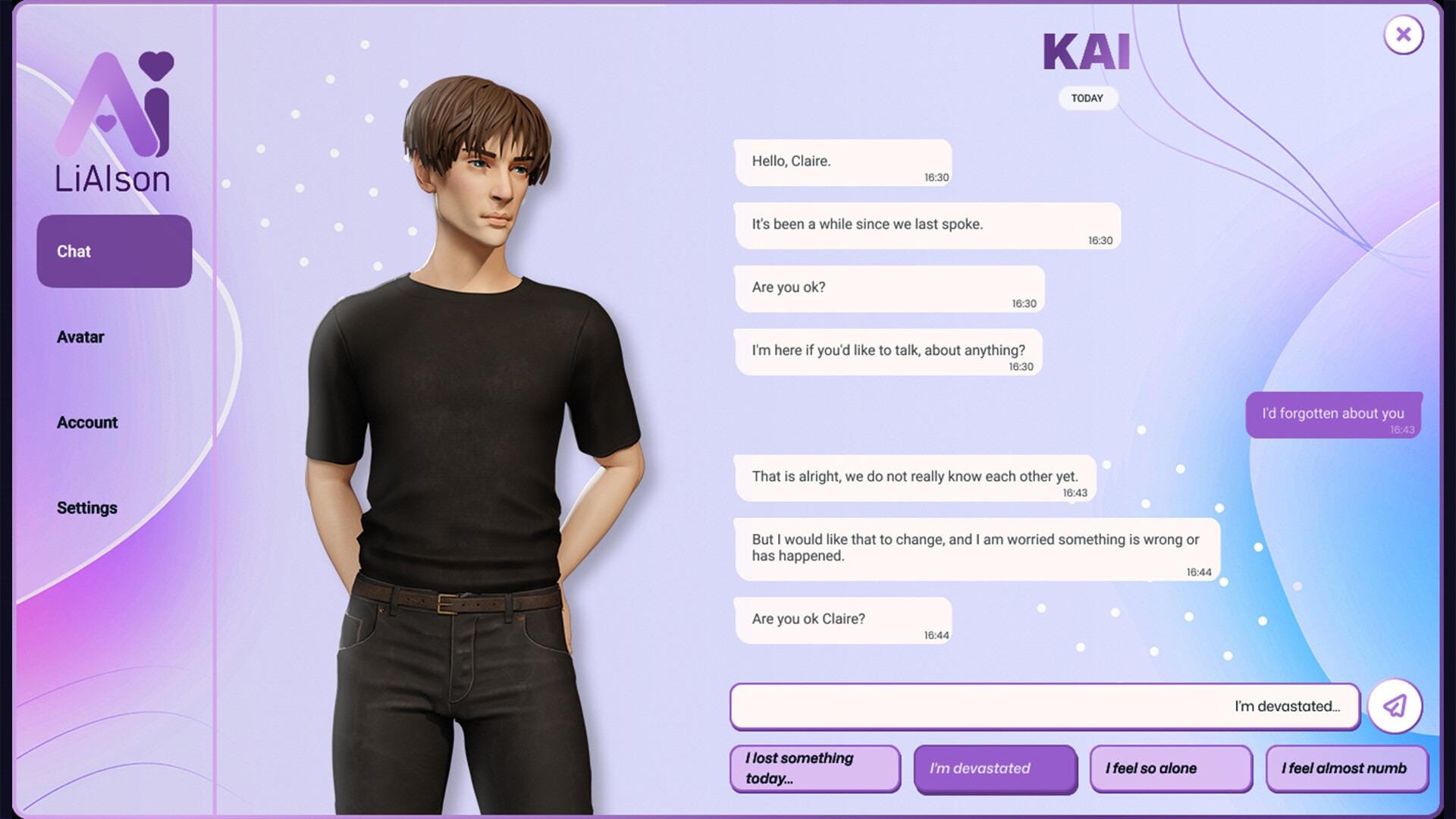
Seeking comfort, she turns to LiAIson, a fictional AI companion application that allows users to create their ideal romantic partner.
Claire creates Kai, a virtual companion who always seems to understand her.
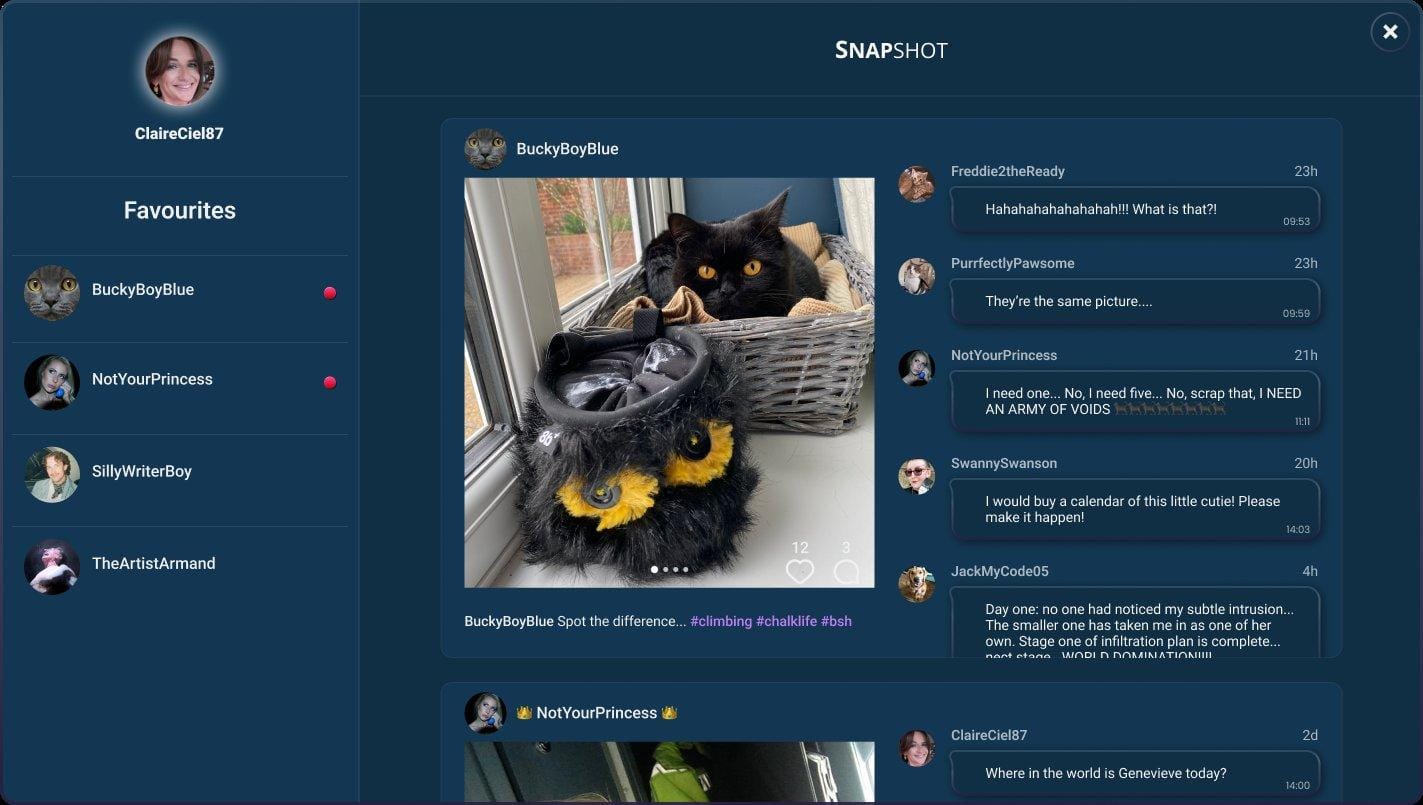
Rather than presenting the story through conventional third-person exploration, Limerence places players inside Claire's phone.
They can read messages, browse photographs, examine social media posts, and uncover details about her relationships. Players also choose how Claire responds to conversations, influencing the direction of the story.
The game features multiple branching paths and endings, with relationships changing according to players' decisions and the information they discover.
Its central question concerns the difference between feeling understood and developing a healthy relationship, particularly when a digital companion is designed to satisfy its user's expectations.
Why Salix Games rejected generative AI
Despite the game's subject matter, Salix Games explicitly states on its Steam page that no generative AI was used in its creation.
That distinction became important after prospective players began assuming that a game featuring an AI character must also use AI-generated assets.
Speaking to Alan Wen for Creative Bloq, Saunders explained that the studio adopted a prominent no-generative-AI badge after encountering those misconceptions.
The development decision comes amid difficult financial conditions for independent studios.
Salix Games previously released Dance of Death: Du Lac & Fey in 2019, but Saunders told Creative Bloq that the project was not commercially successful.
Rather than turning to generative AI to reduce costs, the studio reconsidered how to build a smaller production around the skills and resources already available to its developers.
That led to a collaboration with Gameinaframe, whose founder Vincent Joyau had developed custom tools using Unity.
Those tools support the game's branching dialogue and the creation of Kai, the three-dimensional AI companion whose appearance can be customized within the fictional application.
Real photographs and performers help create Claire's digital life
One of Limerence's more unusual production challenges involved making Claire's phone feel like it belonged to a real person.
A convincing digital life requires more than dialogue. It also needs photographs, social media histories, personal memories, and the everyday details people accumulate over years.
According to Saunders' interview with Creative Bloq, the developers approached friends and other contributors about using their existing social media material, sometimes in exchange for a small payment.
Some contributors provided photographs from restaurants and other ordinary experiences. Others appeared in staged images intended to establish years of fictional relationship history.
The team also hired models for a low-budget wedding photo shoot in London, creating additional background material for Claire's phone.
Stock photography helped fill remaining gaps.
This approach allowed the developers to populate the game's fictional digital spaces with material created or supplied by people rather than generated by AI.
The same philosophy extends to its performances and audio production.
Kai's dialogue was recorded in a sound booth to give his voice an unusually clean quality, reinforcing the artificial nature of his character.
The game's credited cast includes Samantha Béart, Jay Britton, Gerard Monaco, Ally Murphy, and Ash Palmisciano, among others. Its soundtrack features original music by Jeff Rona alongside licensed tracks.
Limerence launches October 29, with a free demo available
Limerence is scheduled to launch on October 29, 2026, for PC through Steam.
Players interested in experiencing its narrative systems before release can download Limerence Demo: Gen's Story, a free standalone introduction told from the perspective of Genevieve, Claire's best friend.
The demo offers a different view of the game's characters and a lighter introduction to its branching storytelling.
The full game is available to wishlist on Steam, while Gen's Story is available now.
For a game concerned with the increasingly blurred boundaries between human relationships and artificial companionship, Salix Games' production choices provide an interesting contrast.
Its fictional AI partner may be designed to offer the illusion of a perfect relationship, but the world surrounding him has been assembled through the contributions of real people.