Steins;Gate Studio MAGES. Built a Retro FPS Almost Entirely With One Developer and AI
MAGES. will showcase Juggernaut, an experimental retro FPS built largely by one director using AI-assisted development, at Tokyo Game Dungeon 14 on October 31. A free Steam release is planned for winter.

Key Takeaways
- A nearly solo development experiment: MAGES. says one director handled most of Juggernaut's production using AI-assisted workflows.
- A free retro FPS: Juggernaut uses raycasting-based pseudo-3D graphics and is planned for a free Steam release this winter, alongside a paid map-customization tool.
- Playable October 31: Visitors to Tokyo Game Dungeon 14 can try the game and pick up a free AI-development booklet while supplies last.
What happens when a game studio hands a director with no programming or asset-production specialty a generative AI toolkit and asks them to build a first-person shooter?
Japanese developer MAGES., best known for its work on Steins;Gate and other adventure games, is exploring that question with Juggernaut, a retro-inspired FPS created as an experiment in AI-assisted game development.
The company announced on October 16 that the game will make its public playable debut at Tokyo Game Dungeon 14 on October 31, 2026, ahead of a planned free-to-play Steam release this winter.
More interesting than the game's throwback graphics is the development process behind them. MAGES. says nearly the entire project, including construction of its pseudo-3D engine, was handled by a single director using AI-assisted workflows.
MAGES. Wants to Know How Far One Developer Can Go With AI
Juggernaut comes from MAGES.' Future Gadget Laboratory (未来ガジェット研究室), a small internal development team established to explore new technologies, genres, and approaches to making games.
The name will sound familiar to Steins;Gate fans, but the team's current experiment is focused on production rather than time travel.
According to MAGES., the project began with a specific question: how much of a game's development could one person complete using AI?
The company says the experiment was partly motivated by the increasing scale and duration of major game productions. As development projects become larger, younger creators may have fewer opportunities to lead their own ideas from concept to completion.
For Juggernaut, MAGES. placed a director without specialized programming or asset-production experience in charge of building an FPS.
The studio says that person handled nearly everything from constructing a pseudo-3D engine to reorganizing the production workflow.
It's an unusually specific development experiment, although the company's announcement doesn't establish how much time or money the approach saved. Nor does it provide an independently verified comparison with conventional development.
Those questions remain open until more information about the production process becomes available.
Juggernaut Uses Old-School FPS Technology
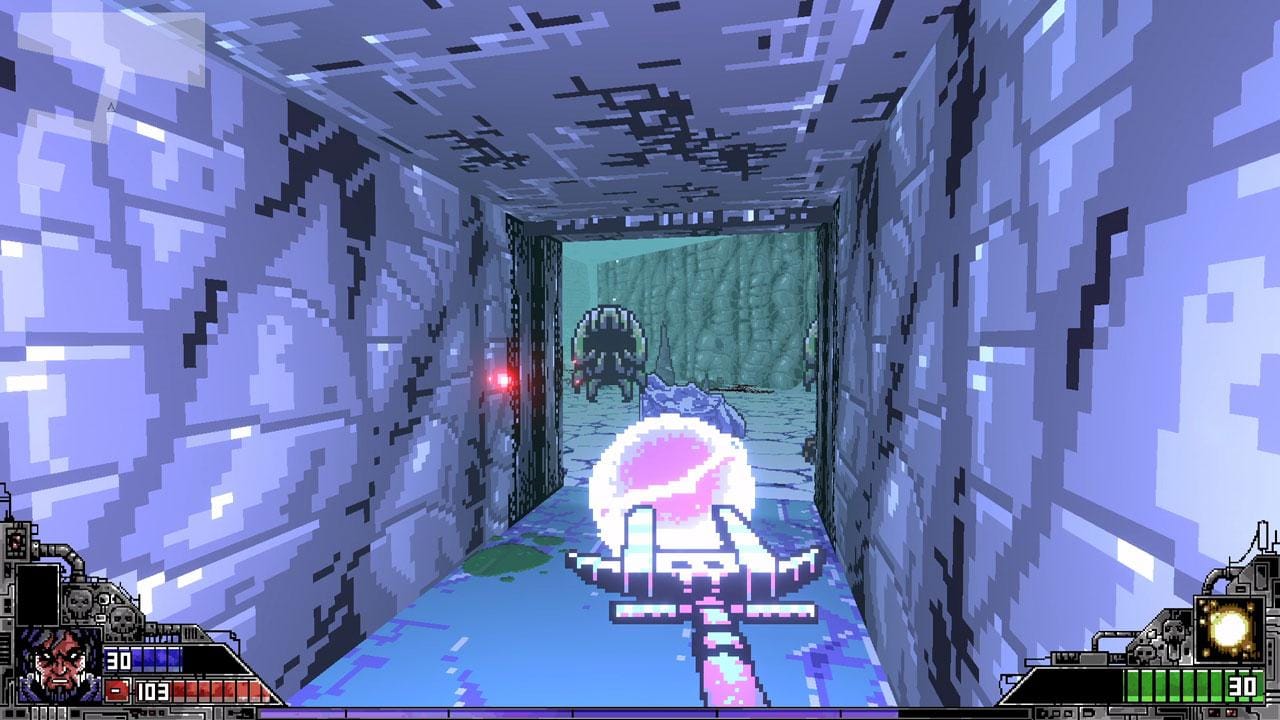
The resulting game is a fast-paced shooter inspired by the visual style of 1990s FPS titles.
Rather than pursuing modern photorealistic environments, Juggernaut uses raycasting, a rendering technique associated with early first-person shooters, to create a pseudo-3D presentation.
That technical choice is particularly relevant to the project's ambitions.
A raycasting-based engine can provide a simpler starting point than a modern, fully three-dimensional rendering pipeline, although building a complete playable game still involves input handling, collision, enemy behavior, rendering, level design, and testing.
MAGES. describes Juggernaut as a demonstration of how AI-assisted development might lower the barrier to entry for small teams and individual creators.
The company plans to release the base game for free on Steam this winter.
A separate paid tool called Asset Maker Pro is also planned for release alongside the game, allowing players to customize maps.
The publisher has not announced a specific release date or price for the paid tool.
Steam's AI Disclosure Adds Another Layer to the Experiment
One of the most notable aspects of Juggernaut is how openly its Steam listing discusses generative AI.
The game's disclosure identifies AI use across several production areas, including source code, graphics, audio, and visual effects.
Reported figures from the listing indicate:
| Production Area | Reported AI-Generated Share |
|---|---|
| Source code | 100% |
| Graphics | 60% |
| Sound | 50% |
| Visual effects | 100% |
Source: Juggernaut's reported Steam AI disclosure. These figures are developer-reported content estimates, not independently audited measures of development time, cost savings, or human involvement.
These percentages describe the developer's stated use of AI-generated content. They shouldn't be interpreted as independently measured development productivity, a breakdown of labor hours, or proof that the final game required no human review.
The distinction matters. AI-generated source code still needs to be integrated, tested, debugged, and maintained, while generated assets must work together within a coherent game.
The broader question is whether a small team can turn those outputs into a stable, enjoyable game with a manageable development process.
Juggernaut could offer a useful case study, but its actual performance, quality, and long-term maintainability will be easier to assess once players and developers can examine the finished product.
Juggernaut Will Be Playable at Tokyo Game Dungeon 14
MAGES. will bring Juggernaut to Tokyo Game Dungeon 14 on Saturday, October 31.
The exhibition runs from 11 a.m. to 5 p.m. Japan Standard Time at the Tokyo Metropolitan Industrial Trade Center's Hamamatsucho building.
Future Gadget Laboratory will be at booth 2X-8, where visitors can try an early build of the shooter.
The company is also distributing a free development guide titled How to Make Juggernaut: How to AI Coding. Written by the game's director, the booklet draws on the experience of creating the project for aspiring developers interested in AI-assisted workflows.
Visitors who try the games can receive a novelty game chip while supplies last.
The booth will also feature two previously released Future Gadget Laboratory projects: ZOMBIE Disaster Prevention Training, a point-and-click adventure, and Bakumori Shokudo, a food-stacking puzzle game.
MAGES. says this will be the team's first appearance at an indie-game exhibition where its developers can speak directly with players and collect feedback.
An Experiment Worth Watching Beyond Its Release
AI-assisted development is increasingly visible across the games industry, but Juggernaut is an especially direct attempt to test its role in small-scale production.
MAGES. isn't presenting the project as a conventional big-budget FPS. It's positioning the game as an experiment in what a creator can build when generative AI handles substantial parts of the implementation process.
Whether that produces a compelling shooter remains to be seen.
The game's October 31 playable showing should provide an early opportunity to assess the experience itself, while the accompanying development booklet may offer a closer look at how the production was organized.
Juggernaut is planned for a free-to-play release on PC via Steam this winter. Players can find its Steam store page or read MAGES.' official announcement.